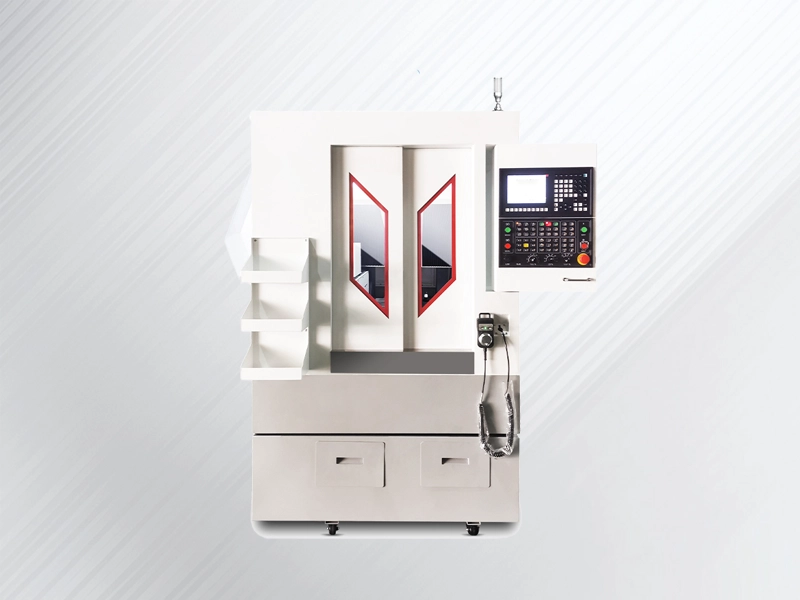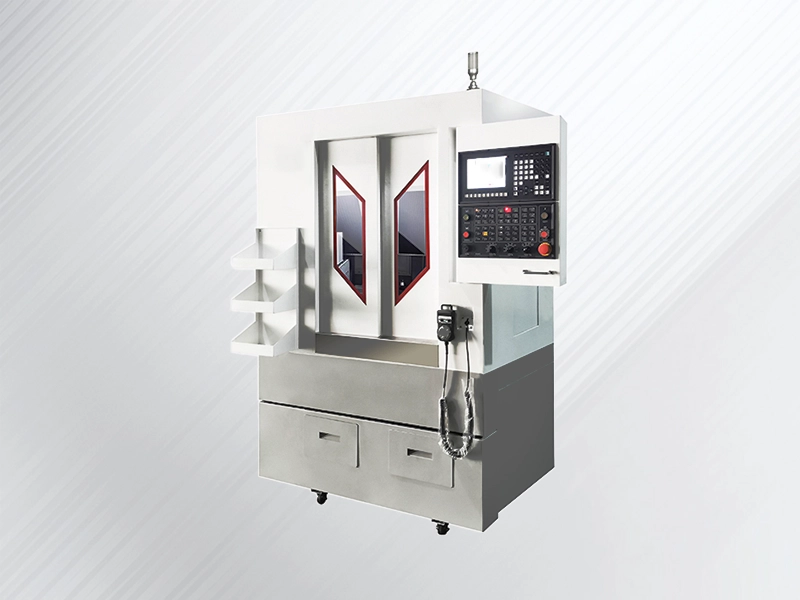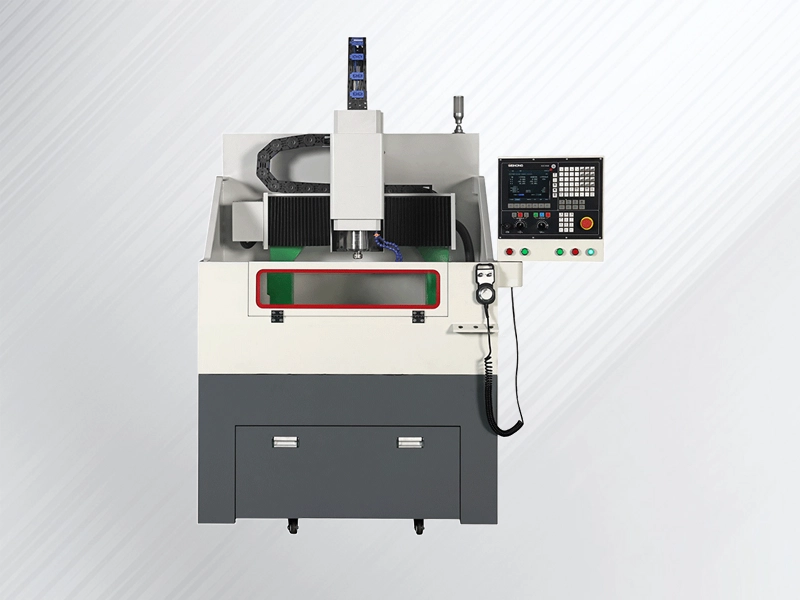
Description
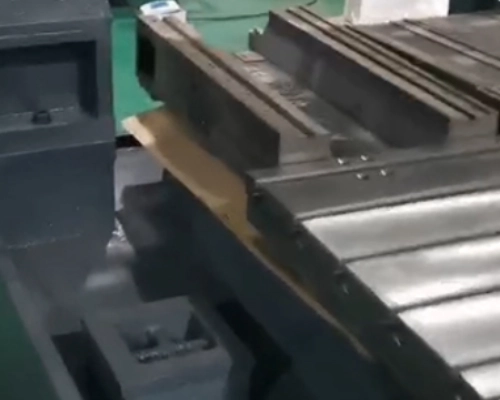
Advantages &Features
Parameter
Product Parameter
| Parameter | Specification |
| Machine tool sheet metal enclosure type | Full-coverage waterproof and dustproof |
| X, Y, Z travel (mm) | 600×500×280 |
| Worktable dimensions (mm) | 600×500 |
| Gantry width (mm) | 685 |
| Spindle collet dimensions (mm) | 100/110/Other |
| Workbench load capacity (kg) | 200 |
| Machine tool dimensions (length, width, height) (mm) | 1440×1630×2140 |
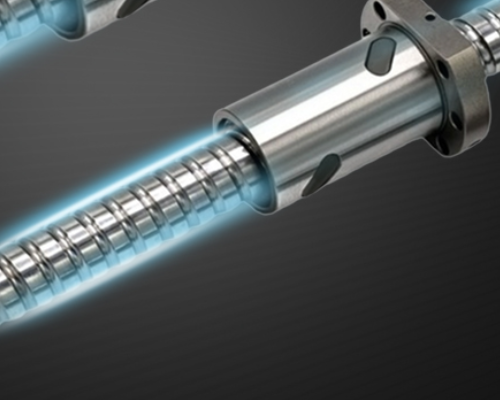
| linear guide | H-class guide rails from HIWIN Taiwan and Yintai Taiwan |
| Drive screw | C5 grade Taiwan TBI ground lead screw |
| Three-axis guide rail dimensions (mm) | 25, 25, 25 |
| Three-axis lead screw (mm) | 25, 25, 25 |
| Screw pitch | 10 |
| Positioning accuracy (mm) | ±0.005 |
| Repeatability (mm) | ±0.003 |
| Three-axis lead screw bearing | German IBC |
| Three-axis motor power (W) | 750 (1100 optional) |
| Power supply voltage (V) | 380/220 |
| Spindle power (kW) | 3.5 (5.5/7.5 optional) |
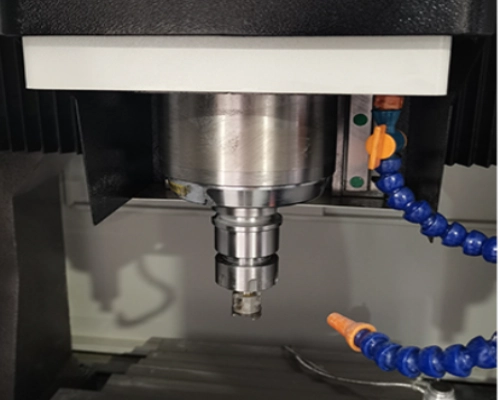
| spindle | ER20 manual tool changer electric spindle |
| spindle speed | 24000 (36000 optional) |
| Spindle cooling method | Water cooling (oil cooling optional) |
| Spindle nose to worktable (mm) | 325 |
| Machine bed material | All cast iron (HT300) |
| coupling | Liyan |
| Internal protection | Saint-Jean Organ Protector (Steel Protector Optional) |
| Aircraft weight (kg) | 1600 |
| Optional configuration | |
| linear guide | Taiwan HIWIN and Taiwan Yintai P-class guide rails |
| Drive screw | C3 grade Taiwan TBI grinding screw |
| Screw pitch | 5 |
| spindle | Automatic tool changer electric spindle |
| Tool magazine | 8-knife disc magazine |
| Handle type | BT30/ISO20/ISO25 |
| operating system | Weihong/Baoyuan/Huazhong/Xindai, etc. |
Application

FAQ
Prices range widely based on size, precision, and features. Entry-level desktop or hobby machines start around $1,800-$7,500 . Mid-range industrial-grade machines with better rigidity, precision components, and automation features typically cost $20,000-$65,000 . High-precision production machines with advanced controls, larger work envelopes, and heavier construction can reach $90,000+ . Factors affecting price include spindle power, control system brand, linear guide quality, and overall build construction.
Consider required working area and part sizes, material types (metals vs. non-metals determine spindle power needs), accuracy requirements (positioning/repeatability specs), and control system compatibility . Evaluate build construction—cast iron provides better stability than welded steel for precision work. Check available tooling options, automatic tool changer necessity, and spindle cooling requirements. Research supplier reputation, spare parts availability, and technical support response times . Request test cuts on your actual materials before purchasing.
Yes, regular maintenance is essential for consistent performance and longevity. Daily tasks include cleaning chips and dust from the worktable and transmission systems, plus checking coolant levels for the spindle . Weekly, apply lubrication oil to the X, Y, and Z axis guideways and ballscrews to ensure smooth motion . Periodically inspect electrical cabinet dust and check terminal screws for tightness . Annual professional service should include geometry verification and axis calibration .
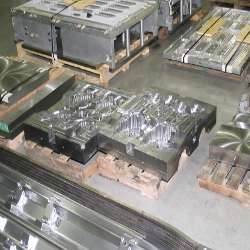
High-value custom molds and dies consistently offer strong profit margins, as precision tooling commands premium pricing . Small batch production of specialized 3C electronic components (housings, heat sinks) generates reliable income due to consistent demand . Prototyping services for automotive and medical clients provide excellent profitability since complex geometries require skilled setup . Custom jewelry molds, personalized engravings, and replacement parts for legacy equipment also yield high returns with relatively low material costs .
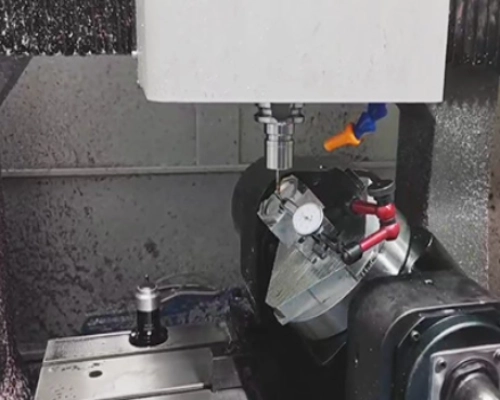
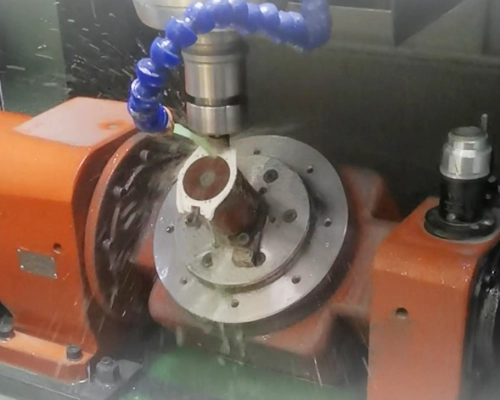
A 3-axis machine moves a cutting tool along three linear axes (X left-right, Y front-back, Z up-down) to remove material from a stationary workpiece . It performs drilling, contouring, pocket milling, surface profiling, and engraving on flat or prismatic parts . Typical operations include cutting slots, machining cavities, creating 2.5D geometries, and producing detailed surface textures . The machine handles diverse materials from metals and plastics to wood and composites, making it suitable for molds, prototypes, and production components .
Yes, 3-axis machines are proven profit generators for small to medium workshops . With machine hourly rates of $10-15/hour, shops can achieve healthy margins on parts that take 15 minutes to several hours to machine . Volume discounts make production runs profitable—aluminum bracket prices drop from $85 (qty 1) to $22 (qty 100) . Many businesses use them for custom orders, prototypes, and limited production runs . A furniture studio increased production capacity 300% after implementing a 3-axis CNC .
With proper maintenance, industrial-grade 3-axis machines typically last 10-15 years in production environments . Key factors affecting lifespan include operating hours, materials machined, and adherence to maintenance schedules . Regular lubrication of linear guides and ballscrews, plus periodic professional service including geometry verification, can extend service life significantly . Machines with premium components like ground ballscrews and high-quality linear guides maintain accuracy longer . Light-duty use in prototype shops may achieve even longer service intervals.
Calculate material costs first (aluminum $4-5/kg, stainless $5-8/kg) which typically represent 20-40% of total cost . Then estimate machining time including setup and cycle time, multiplied by machine hourly rate ($10-15/hour for 3-axis) . Add programming costs ($10-20/hour), quality control, and post-processing . Apply volume discounts—25-35% for 100 pieces, 40-60% for 1000+ pieces . Consider complexity: tight tolerances (±0.02mm) add 15-30% versus standard ±0.1mm . Include markup for your expertise and overhead.