Description
Advantages &Features
Parameter
Product Parameter
| Outer Diameter (mm) | Core Wire | Coating Method | Core Wire (mm) | Working Tension Force (N) | Breaking Tension Force (N) | Recommended Length (mm) |
| 0.3 | Tungsten | Full | 0.21 | 60 | 115 | 1M–4M |
| 0.5 | Tungsten | Full | 0.4 | 110–130 | 250 | 1M–6M |
| 0.65 | Steel | Full | 0.4 | 110–130 | 250 | 1M–10M |
Application

FAQ
Loop type diamond wire is used for precision slicing of hard, brittle materials including semiconductor crystals (silicon, SiC, GaAs), optical materials (sapphire, quartz), advanced ceramics, and research samples . Its closed-loop design enables continuous unidirectional cutting at high speeds up to 80 m/s, producing smooth surfaces with minimal material loss . Common applications include wafer production for electronics, LED substrate manufacturing, photovoltaic cell slicing, and laboratory sample preparation where cut quality and material conservation are critical .
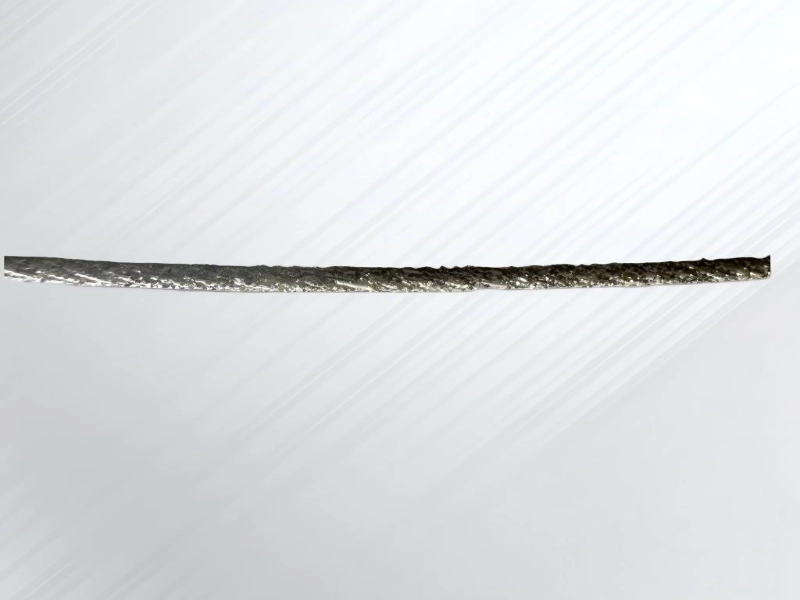
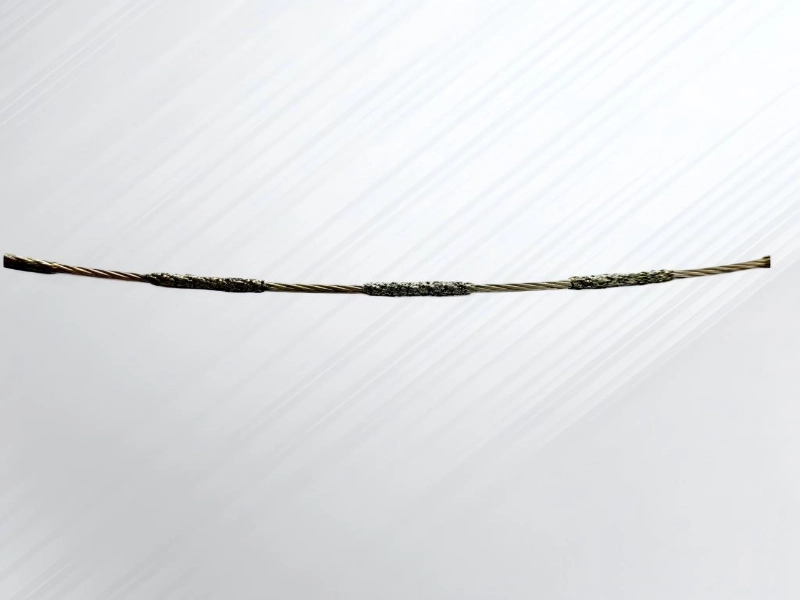
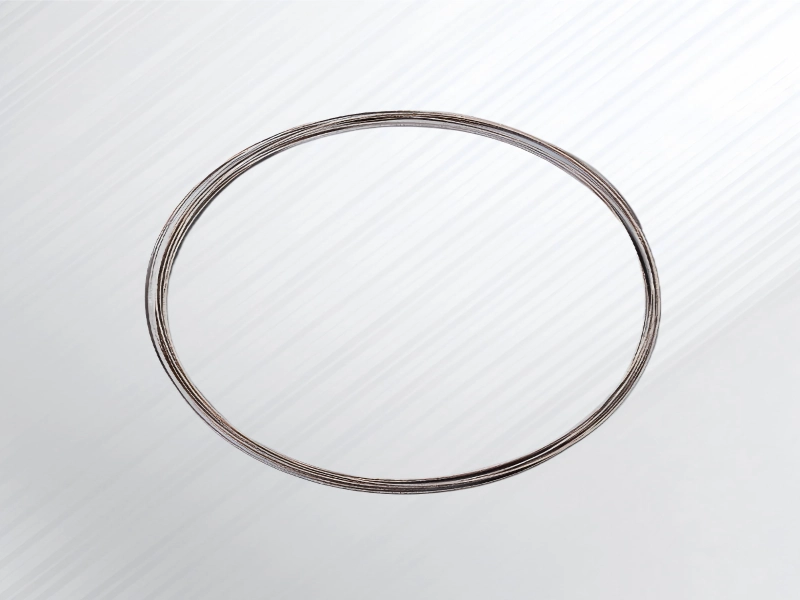
A loop type diamond wire is a closed-loop cutting tool consisting of a high-tensile metal core (steel or tungsten) coated with industrial diamond grit bonded via electroplating . Unlike traditional spooled wire that moves back and forth, it forms a continuous endless loop that rotates in one direction at high speed . This design eliminates vibration from directional changes, maintains constant tension, and enables precise cutting of hard brittle materials with narrow kerf widths as small as 0.3 mm .
Diamond wire loops are categorized by coating pattern: full-coated (continuous diamond layer for smoothest surfaces), segmented-coated (abrasive zones with gaps for chip clearance and cooling), and thread/spiral-coated (helical diamond pattern balancing chip removal and surface quality) . They also vary by core material (steel or tungsten), diameter (0.3 mm to 3.5 mm), and diamond grit size for different cutting applications from precision laboratory work to industrial production .
Lifespan varies by application and material. For precision laboratory cutting of crystals like SrTiO3 or GaAs, estimated lifetime is approximately 30 cutting hours . Industrial production applications may last several days of continuous use depending on material hardness, cutting parameters, and proper maintenance . Factors affecting longevity include wire core material (tungsten ≥4000 MPa outlasts steel), diamond quality, tension control (typically 140-180 N), and adequate coolant flow . Proper operation can extend life by 25-40% .
Loop type diamond wire cuts through abrasive grinding rather than sharp edges like a blade. Industrial diamond particles (typically 5-60 micron grit) embedded in the wire surface act as countless cutting points that grind through material . Electroplated nickel bonding provides very sharp, aggressive cutting edges for high material removal rates . “Sharpness” is determined by diamond grit size (finer grit = smoother finish, coarser grit = faster cutting) and can cut materials up to 9.5 on Mohs hardness scale .
Yes, but with limitations. Loop type diamond wire can cut certain metals including titanium alloys, nickel-based superalloys (Inconel), molybdenum plates, and precious metals where narrow kerf and minimal waste are required . It is also used for magnetic materials and sintered metal parts . However, it is not designed for general metal cutting of steel or aluminum, as these materials can load the diamond surface and reduce cutting efficiency . Diamond wire excels with hard brittle materials like ceramics, crystals, and stone rather than ductile metals .
The wire core is made of high-tensile steel or tungsten, not diamond . Industrial-grade synthetic diamond particles are bonded to this core surface using electroplating (typically nickel-based) . This creates a composite tool where the diamond provides the cutting action while the metal core provides strength and flexibility. The diamond particles are firmly embedded in the coating and gradually exposed as the wire wears, maintaining cutting performance throughout its life .
Loop type diamond wire cannot cut materials harder than diamond, as diamond is the hardest known material (Mohs 10) . It is ineffective on extremely tough, ductile metals that load the diamond surface . Very soft, sticky materials like rubber or certain polymers may gum up the wire rather than cut cleanly . However, it can cut virtually anything softer than diamond, including semiconductors, optical crystals, ceramics, glass, stone, composites, and even ultra-soft materials like sponge and eggshells with proper parameters .