In the realm of high-end manufacturing, the demand for precision is relentless. From the lenses in your smartphone to the sophisticated prisms used in aerospace sensors, optical glass is the silent hero of the modern technological age. However, shaping this material is a formidable challenge. It is notoriously brittle, prone to chipping, and sensitive to thermal stress.
To meet these challenges, the industry has pivoted toward a groundbreaking solution: Diamond Wire Saw technology. In tCutting Optical Glass: Diamond Wire Saw Precision Guideis guide, we explore the synergy between optical glass and diamond wire cutting, and why this method has become the gold standard for achieving perfection in glass fabrication.
1. What is Optical Glass?
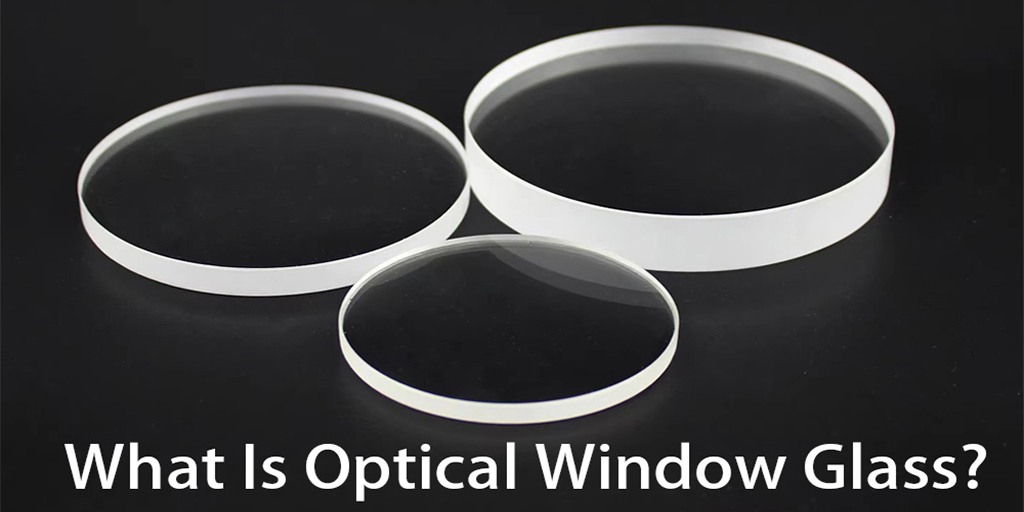
Optical glass is far more than a transparent medium; it is a precision-engineered material designed to interact with light in highly predictable and controllable ways. Unlike common window glass, optical glass must meet stringent standards regarding purity, homogeneity, and environmental stability.
To understand why specialized cutting tools like diamond wire saws are necessary, we must examine the unique properties that define this material.
A. Optical Characteristics: The Mastery of Light
The primary function of optical glass is to manipulate light. Two key metrics define its quality:
- Refractive Index ($n_d$): This determines how much light bends as it enters the glass. Optical glass is engineered to offer a vast range of refractive indices, allowing designers to create lenses that are thinner yet more powerful.
- Abbe Number ($V_d$): This measures the material’s dispersion (how much it separates light into colors). High-quality optical glass minimizes “chromatic aberration,” ensuring that images remain sharp and free of color fringing.
- High Transmittance: Optical glass is refined to eliminate impurities like iron oxide, which can cause a greenish tint. This ensures maximum light throughput across ultraviolet (UV), visible, and infrared (IR) spectrums.
B. Chemical Properties: Resistance and Durability
ecause optical components are often exposed to harsh environments—ranging from humid tropical climates to industrial chemical vapors—their chemical stability is critical.
- Hydrolytic Resistance: High-grade optical glass is treated to resist “weathering” or corrosion caused by moisture, which can otherwise create a cloudy surface film over time.
- Acid and Alkali Resistance: During the manufacturing process, glass undergoes various cleaning and etching stages. Optical glass is formulated to withstand these chemicals without losing its surface integrity or transparency.
C. Mechanical Properties: The Challenge of Brittleness
The mechanical nature of optical glass is what makes the cutting process so technically demanding.
- High Hardness: Most optical glasses, especially those enriched with lanthanum or quartz, are extremely hard. This makes them resistant to scratching but difficult to slice using traditional blades.
- High Brittleness: Optical glass has almost no plasticity. Under mechanical stress, it does not deform; it fractures. This lead to the common problem of edge chipping or sub-surface damage (SSD) when using low-precision cutting tools.
- Thermal Stability: Precision optics must maintain their shape despite temperature fluctuations. Optical glass typically has a low coefficient of thermal expansion (CTE), meaning it won’t warp under the heat of a high-speed cut—provided the cutting tool (like a diamond wire) minimizes friction.
D. Applications of Optical Flat Glass
Optical flat glass—plates that have been cut and polished to be perfectly parallel—is a cornerstone of modern technology. Its applications include:
- Consumer Electronics: Cover glass for high-end smartphone cameras, tablets, and wearable sensors.
- Industrial Metrology: High-precision windows for laser measurement systems and optical encoders.
- Scientific Instrumentation: Microscope slides, beamsplitters, and filters used in laboratory diagnostics.
- Semiconductor Manufacturing: Photomask substrates and wafers used in lithography processes.
- Aerospace & Defense: Viewports for satellites, cockpit displays, and infrared guidance domes for aerospace vehicles.
2. What is a Diamond Wire Saw?
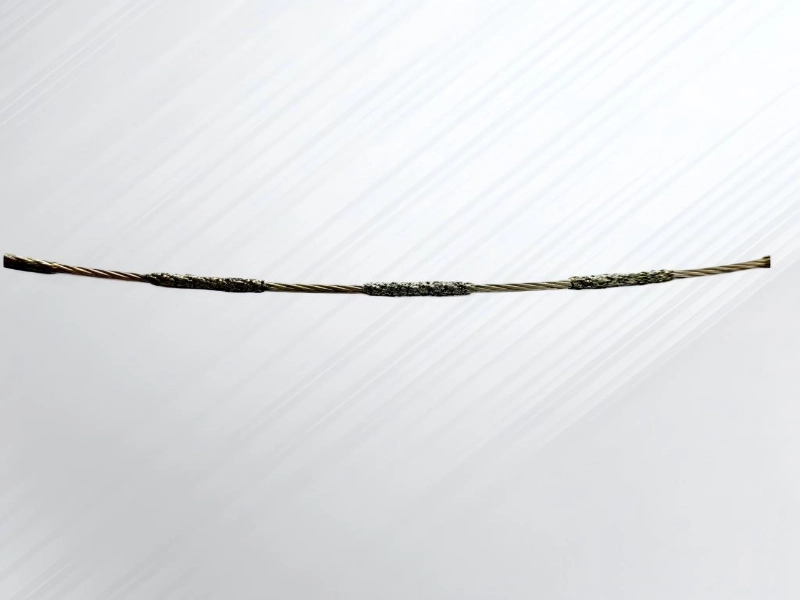
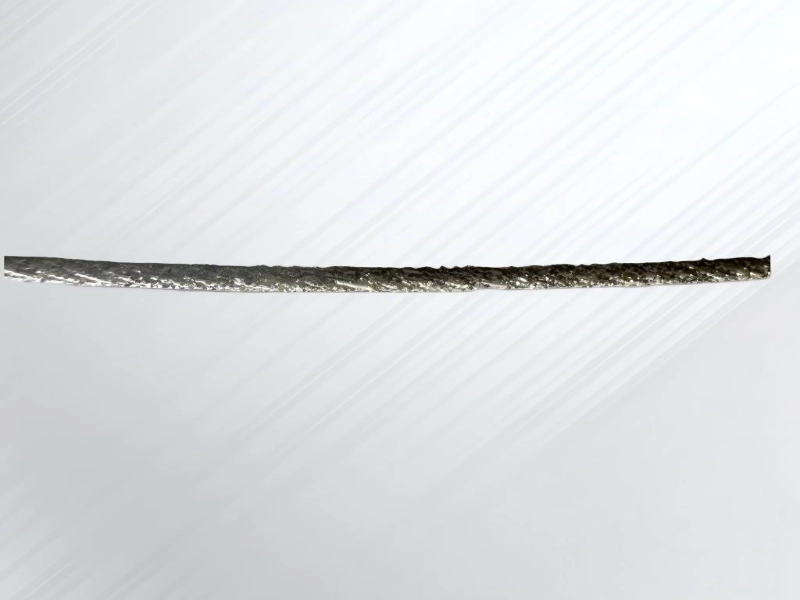
A Diamond Wire Saw is a precision cutting tool that utilizes a high-strength steel wire impregnated with industrial diamond grits. Since diamond is the hardest known material on Earth, it acts as the “teeth” of the saw, capable of grinding through almost any hard or brittle substance.
1. Reciprocating (Open-Loop) Wire: The wire moves back and forth like a traditional saw. While effective, it is limited by speed and the “jerk” of direction changes.
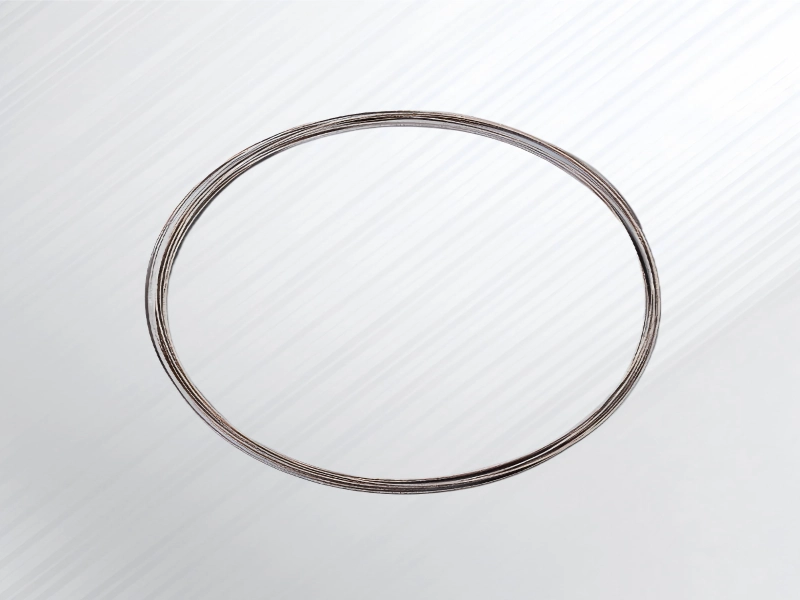
2. Endless (Closed-Loop) Diamond Wire: This is the pinnacle of modern cutting technology. The wire is welded into a continuous loop and rotates at incredibly high speeds in a single direction.
The diamond particles are either electroplated onto the wire or resin-bonded. For optical glass, electroplated wire is often preferred due to its aggressive cutting ability and consistent grit exposure.
3. Why Use Diamond Wire Saws for Optical Glass?
Traditional cutting methods, such as CNC grinding wheels or manual scoring, often struggle with the inherent brittleness of optical glass. The transition to diamond wire saws—specifically endless diamond wire loops—offers several transformative advantages.
High Cutting Precision and Thin Kerf
In the world of expensive optical materials, waste is costly. Diamond wires are incredibly thin (often ranging from 0.12mm to 0.65mm). The “kerf”—the width of the cut—is significantly smaller than that of a traditional blade.
Benefit: You get more usable material from a single block of glass, maximizing your ROI.
Minimal Chipping and “No Edge Breakage”
One of the biggest headaches in glass processing is chipping. Traditional blades exert high localized pressure, causing the edges of the glass to shatter at the exit point of the cut.
The Diamond Wire Advantage: Because the wire uses a high-speed “grinding” action rather than a “shearing” action, the mechanical stress on the glass is evenly distributed. This results in smooth, clean edges that require significantly less post-processing or polishing.
Superior Surface Quality
The surface finish left by a diamond wire saw is often measured in microns of Ra (Roughness Average). Because the wire moves at constant high speeds (up to 60m/s or more), it leaves a surface that is nearly “pre-polished.” This reduces the time and energy spent in the fine-grinding and polishing stages of lens manufacturing.
4.Exceptional Cutting Efficiency
To understand why this process works so well, we must look at the Material Removal Rate (MRR). In diamond wire saw cutting, each diamond crystal acts as a tiny abrasive point. As the wire passes through the optical glass, these points create micro-fractures in a controlled manner, removing the material as a fine powder (swarf).
The Importance of Cooling and Lubrication
While diamond wire cutting is efficient, it generates friction. To maintain the integrity of the optical glass, a cooling system is essential.
- Water-Based Coolants: These are used to wash away the glass dust and keep the wire cool, preventing thermal expansion of the glass which could lead to cracking.
- Swarf Management: Efficiently removing the glass particles ensures that the “gullets” between the diamond grits don’t get clogged, maintaining the wire’s sharpness.
5.Choosing the Right Diamond Wire: A Buyer’s Perspective
If you are looking to implement DWS technology in your facility, consider these three factors:
1. Wire Diameter: Thinner wires reduce waste but are more fragile. For large optical blocks, a slightly thicker wire (e.g., 0.45mm) provides the tension strength needed for a straight cut.
2. Diamond Grit Size: Finer grits produce a better surface finish but cut slower. Coarser grits are better for “roughing” out shapes quickly.
3. Linear Speed: Ensure your equipment can handle the high RPMs required for endless wire loops to maximize the “no-chipping” benefit.
6. Future Trends: Toward Automation and Sustainability
The future of optical glass cutting lies in Green Manufacturing. Diamond wire sawing is inherently more sustainable than traditional slurry-based cutting (which uses loose abrasives). DWS uses less water, creates less hazardous waste, and the steel wires are often recyclable.
Furthermore, the integration of AI-driven tension control ensures that the wire never breaks, even when cutting through variable densities of glass, making the process fully autonomous.
Conclusion
The evolution from traditional glass-cutting tools to Diamond Wire Saws represents a paradigm shift in manufacturing. By prioritizing precision, reducing material waste, and eliminating edge breakage, this technology allows engineers to push the boundaries of what is possible with optical glass.