https://www.zelatec.com/wp-content/uploads/2026/01/Aluminum-Profile-Corner-Crimping-Production-Line.webp

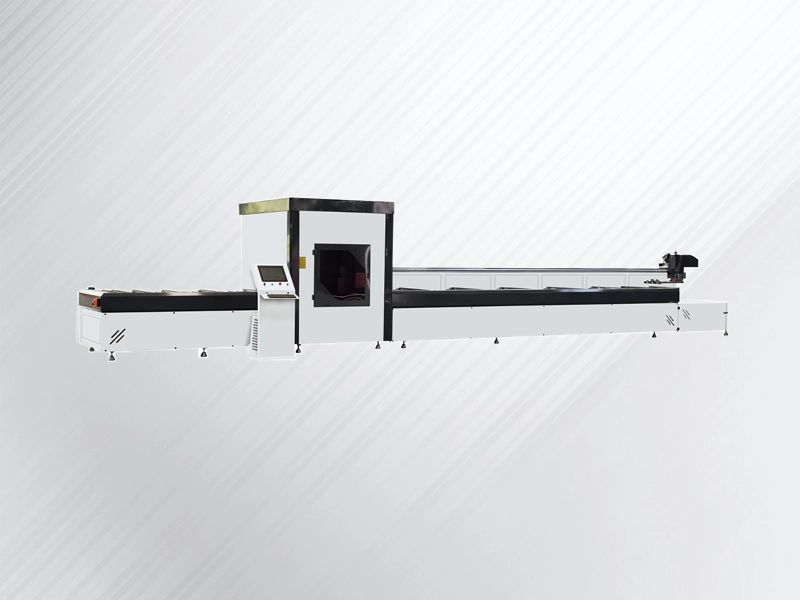
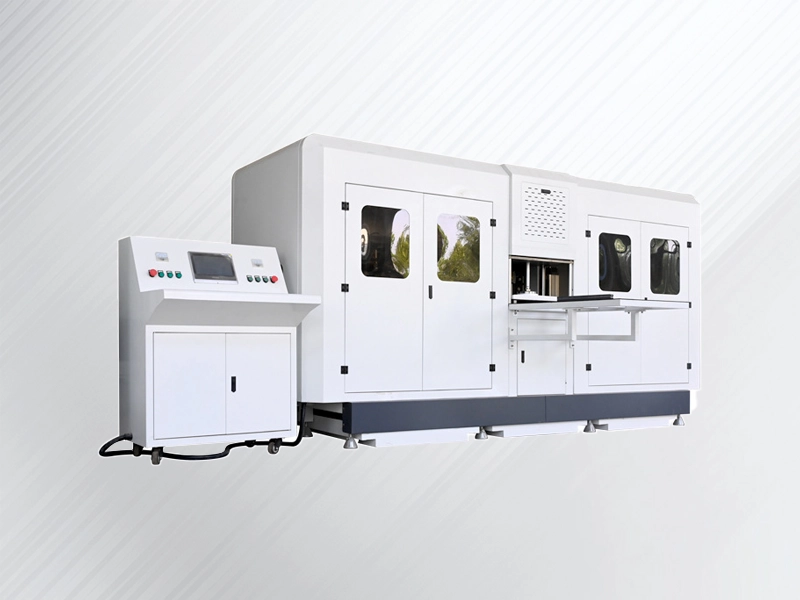
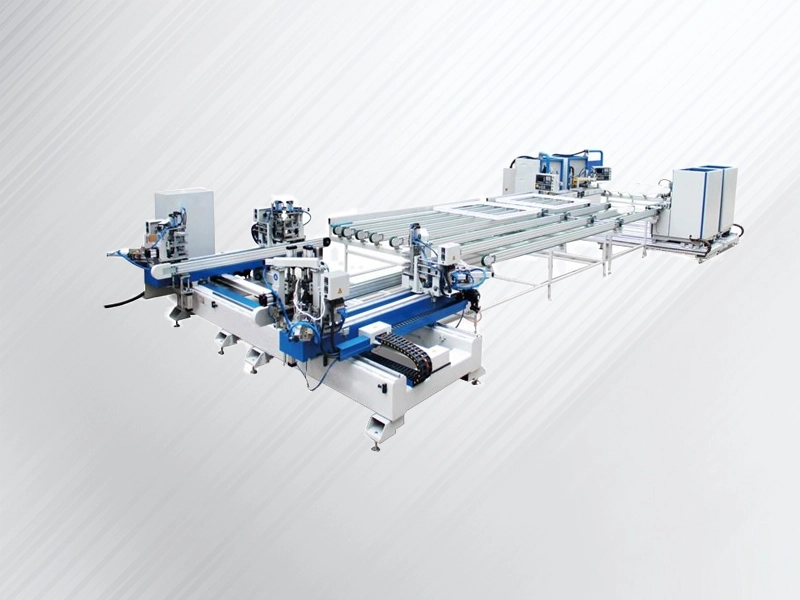
Aluminum Profile Corner Crimping Production Line

    Description

    Automated Conveyor & Transfer System
    Designed to completely eliminate heavy manual lifting, the production line features integrated input and output conveyor belts. It effortlessly automatically transfers the assembled rectangular frames into the crimping zone and pushes the finished window to the next station in just 45 seconds.
    Multi-Axis CNC Positioning System
    The entire mechanical architecture is driven by an intelligent network of up to 18 servo motors. This system automatically adjusts the front and rear clamping positions, inner positioning blocks, and cutter heights, allowing the line to instantly adapt to different profile dimensions without any manual wrenching.
    Intelligent Torque & Crimping System
    Before the final extrusion occurs, the advanced torque monitoring system actively pre-loads and tightens all four corners of the window frame. This guarantees mathematically perfect diagonal dimensions, effectively preventing any profile distortion during the high-pressure crimping cycle.
    IPC & ERP Integration System
    Equipped with a robust industrial control computer (IPC), the production line’s software system seamlessly docks with leading window design ERPs like Klaes and Jopps. Operators can instantly import custom processing data via the factory network, USB drive, or by scanning a QR code.

    Advantages &Features

    01
    The Aluminum Profile Corner Crimping Production Line enables continuous, multi-corner crimping, significantly increasing daily output compared with standalone corner crimping machines.
    02
    Synchronous crimping ensures uniform mechanical strength at all corners, improving the structural stability and long-term durability of aluminum window and door frames.
    03
    High automation minimizes manual operations, lowers labor costs, and reduces human error during corner assembly.
    04
    Designed to handle various aluminum door and window profiles, making the Aluminum Profile Corner Crimping Production Line suitable for diversified product lines.
    05
    Industrial-grade components and servo control systems ensure long-term stability, even under high-load, continuous production conditions.
    06
    The production line supports integration with digital production management systems, helping manufacturers move toward intelligent and standardized aluminum fabrication.

    Parameter

    ParameterSpecification
    Max Profile Length6,000–6,500 mm (standard UPVC extrusion length)
    Cutting Angles45° / 90° standard, optional multi-angle configuration
    Cutting AccuracyWithin ±0.5 mm over long runs
    Dust ExtractionDual ports Ø 120–150 mm, supports central dust system
    Air Supply0.6–0.8 MPa compressed air
    Power Supply380V / 50Hz, optional 220V / 60Hz
    Machine DimensionsLength 4.5–6.5 m, width 0.8–1.2 m, height 1.5–1.8 m

    FAQ

    What types of aluminum profiles can this production line process?

    The Aluminum Profile Corner Crimping Production Line supports most standard aluminum door and window profiles and can be customized for special profile structures.

    How does this production line improve corner strength?

    By applying synchronized and precisely controlled crimping force on all corners, the production line ensures tighter joints and improved mechanical strength.

    Is the Aluminum Profile Corner Crimping Production Line suitable for mass production?

    Yes. It is specifically designed for high-volume aluminum window and door manufacturing with stable output and consistent quality.

    Does the machine require frequent manual adjustments?

    No. Automatic positioning and servo control significantly reduce manual adjustments, improving efficiency and reducing setup time.

    Can the production line be integrated with existing factory layouts?

    Yes. The Aluminum Profile Corner Crimping Production Line can be customized to match different workshop layouts and production flows.

    What maintenance level is required for long-term operation?

    Routine maintenance is simple, focusing mainly on lubrication, system inspection, and standard component checks to ensure long-term stable performance.
    Related Products

    Request a
    Free Consultation