Description
Advantages &Features
Parameter
Product Parameter
| Parameter | Specification |
| Applicable Profiles | PVC / UPVC window & door profiles |
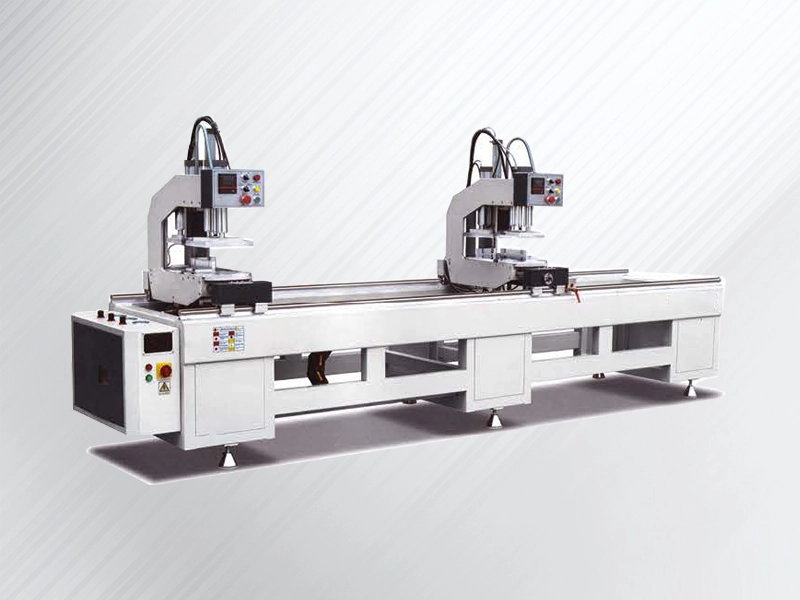
| Welding Corners | 2 corners welded simultaneously |
| Welding Angle | 90° |
| Power Supply | 380 V / 50 Hz |
| Total Power | 3.5 – 4.5 kW |
| Max. Welding Profile Height | 120 – 160 mm |
| Max. Welding Profile Width | 120 – 150 mm |
| Welding Temperature Range | Up to 300 °C |
| Air Pressure | 0.6 – 0.8 MPa |
| Control System | PLC / Digital Control |
| Clamping System | Pneumatic |
| Application | Medium-scale PVC window production |
| Feature | Higher efficiency than single-head welding |
FAQ
It is highly versatile. One of the machine heads is specially designed with a variable angle function (typically 30° to 180°), allowing you to easily clamp and weld arch windows, bay windows, and other irregular architectural shapes.
It means the machine’s moving parts do not require constant manual oiling. This keeps the internal mechanics clean from dust buildup, prevents oil stains from ruining your white UPVC profiles, and saves your operators valuable maintenance time.
Yes. The right welding head is easily movable along the high-precision linear guides, allowing the equipment to accommodate a wide range of profile lengths to easily fabricate oversized doors and commercial windows.
Not at all. The interface is designed for simplicity. Operators only need to input basic parameters like heating time and welding pressure based on the specific profile thickness, and the machine automatically executes the entire cycle flawlessly.
The combination of exact temperature control via the PC and the highly stable pneumatic clamping ensures the UPVC material melts and fuses evenly. This creates a high-strength, weather-resistant bond that meets strict industry standards.
No. The moving carriage utilizes premium linear motion ball bearings that ensure absolute smooth and rigid travel. Once clamped pneumatically, the profiles are held in perfect alignment throughout the entire heating and joining process.