In modern manufacturing, efficiency and precision are no longer optional—they are essential. This is where CNC technology comes in. But what is a CNC machine, and why has it become such a critical part of industrial production?
A CNC (Computer Numerical Control) machine is widely used across industries to automate the machining of metals, molds, and precision components. From small-batch prototyping to large-scale production, CNC machines help manufacturers and engineers achieve consistent quality, tight tolerances, and higher productivity with less manual intervention.
However, not all CNC machines are the same. Different types of CNC equipment are designed for different applications—some focus on high-speed precision work, while others are built for heavy-duty cutting or multi-purpose machining. Choosing the right machine depends heavily on your specific production needs, materials, and accuracy requirements.
In this guide, we’ll break down the basics of CNC machines and help you understand how to select the right solution for your manufacturing process.
What Is a CNC Machine?
Let’s start with the basics. CNC stands for Computer Numerical Control.
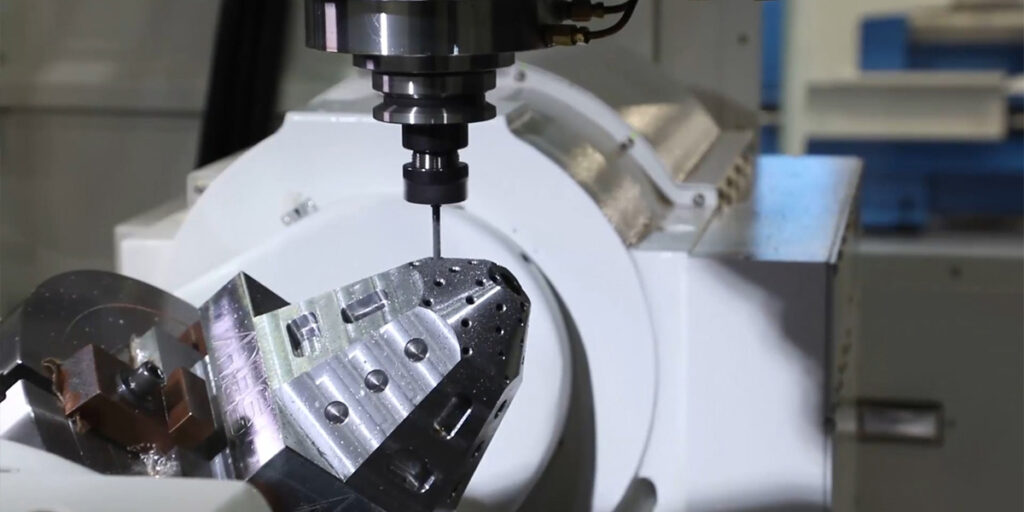
In simple terms, a CNC machine is a manufacturing tool that runs on programmed instructions. Instead of a machinist manually turning handwheels or guiding a cutting tool, the machine follows a set of digital commands—usually in G-code—to move precisely along multiple axes.
So what does that mean in practice? It means the machine controls the cutting path automatically. The operator tells it what to do through software, and the machine handles how to do it—moving spindles, rotating workpieces, changing tools, all with minimal hands-on involvement.
Why does this matter? Because CNC technology replaces manual operation with automation. That shift brings three major benefits: accuracy, efficiency, and repeatability. A CNC machine can run the same program thousands of times and produce identical parts every single time. It eliminates the variability that comes with human operation.
For manufacturers and engineers, this is what makes CNC equipment indispensable. It turns complex designs into physical parts—consistently, reliably, and at scale.
Key Components of High-Precision Systems
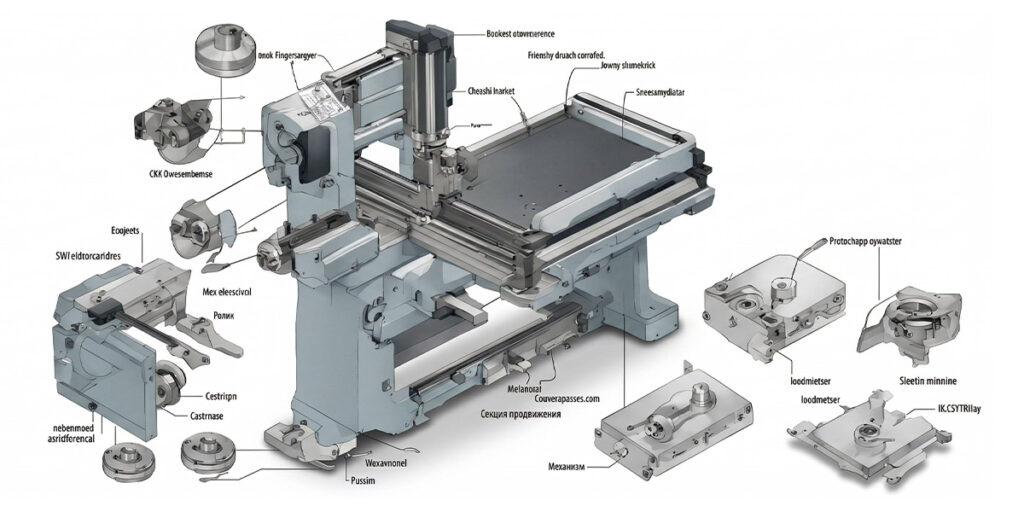
A CNC machine is only as good as the components that make it up. When you’re evaluating equipment—especially for precision work—three areas matter most: the bed, the spindle, and the drive system.
Bed Stability
The machine bed is the foundation. Any vibration during cutting will show up on the finished part. That’s why high-quality machines use cast iron structures—HT300 cast iron in particular. It absorbs vibration effectively and maintains dimensional stability even during heavy cuts or long production runs.
Spindle Performance
The spindle determines how cleanly the machine removes material. Higher spindle speeds—typically in the 24,000 to 36,000 RPM range—allow for finer cuts and smoother surface finishes. For applications like engraving or finishing, this speed range makes a noticeable difference in part quality.
Axis Precision
Movement accuracy comes from the drive system. Precision-ground ball screws and linear guides work together to position the cutting tool exactly where it needs to go. When these components are properly matched and built to tight tolerances, the result is consistent accuracy across thousands of machining cycles.
Together, these three components define what a machine is capable of. Skimp on any one, and you’ll see the trade-offs in part quality, cycle time, or long-term reliability.
How Does a CNC Machine Work?
A CNC machine follows a clear and structured workflow, turning a digital design into a finished part with high accuracy and consistency. For manufacturers and engineers, understanding this process helps improve both efficiency and product quality.
- 1. CAD Design
The process begins with a digital model. Engineers use CAD software such as SolidWorks or AutoCAD to create a 2D drawing or 3D model. This defines the part’s geometry, dimensions, and tolerances. - 2. CAM Programming
Next, the design is imported into CAM software. Here, the machining strategy is defined, including tool paths, cutting speeds, and feed rates. The system then generates G-code, which is the instruction language used by CNC machines. - 3. Machine Setup
Before machining starts, the operator prepares the machine. This includes fixing the workpiece securely, installing the appropriate tools, and setting the zero point (tool alignment). Proper setup is essential for accuracy and repeatability. - 4. Machining Execution
The CNC controller reads the G-code and directs the machine in real time. It controls the movement of the spindle and axes to perform operations such as cutting, drilling, or milling. The process typically moves from rough machining to finishing for better surface quality. - 5. Inspection and Finishing
After machining, the part is checked to ensure it meets specifications. This may involve manual measurement or precision inspection tools such as CMM.
Overall, CNC machining is a reliable and automated way to produce complex parts with consistent results.
Types of CNC Machines
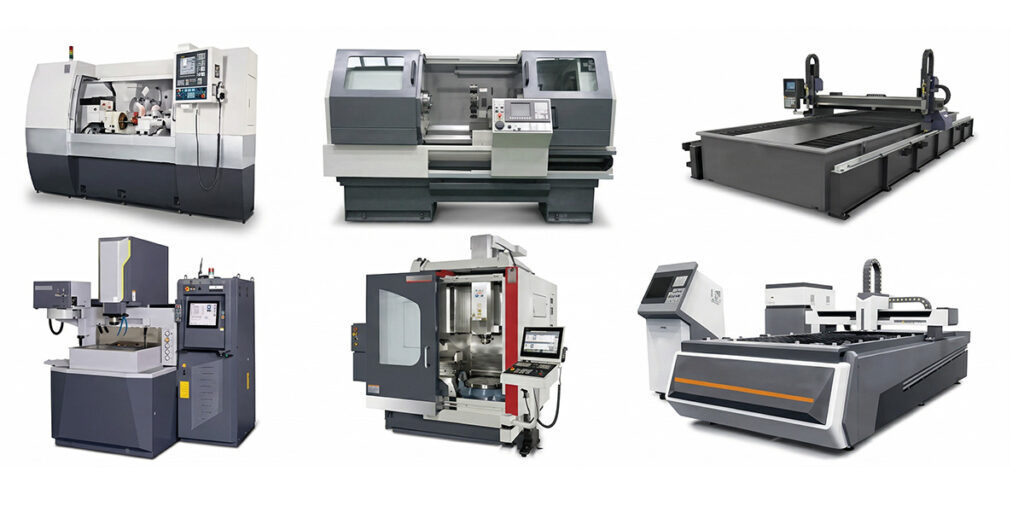
For manufacturers and engineers, choosing the right CNC machine starts with understanding the main types—what they’re designed to do, where they excel, and where they fall short. Here’s a practical breakdown by function.
CNC Milling Machines
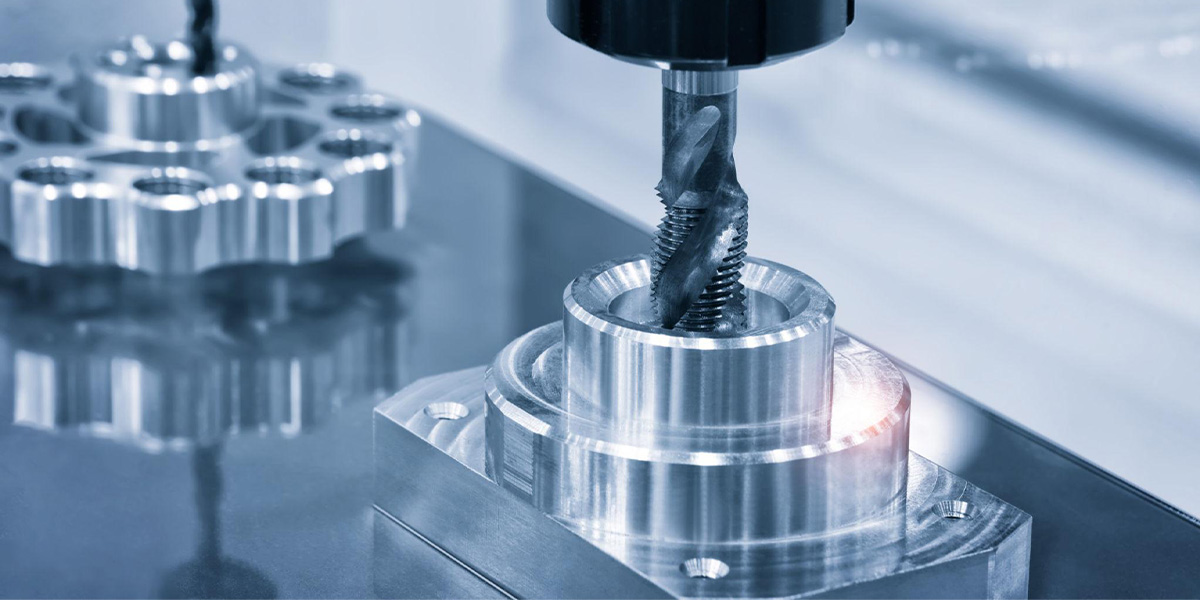
CNC milling machines are built for material removal. They use rotating cutting tools to shape metal, steel, aluminum, and other rigid materials. These machines prioritize rigidity, spindle torque, and accuracy over speed.
Typical applications include mold bases, automotive components, structural parts, and any workpiece that requires significant material removal. A milling machine is the go-to choice when you need to cut hard materials or produce complex 3D shapes.
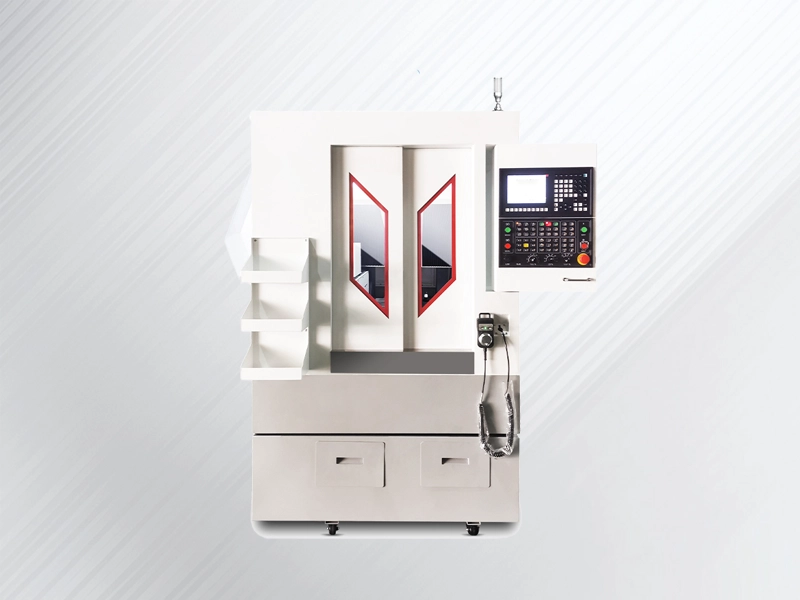
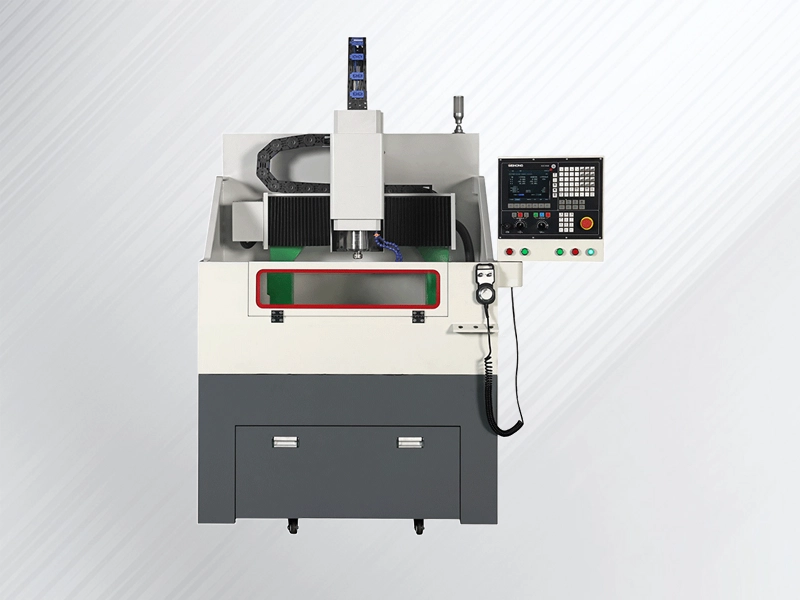
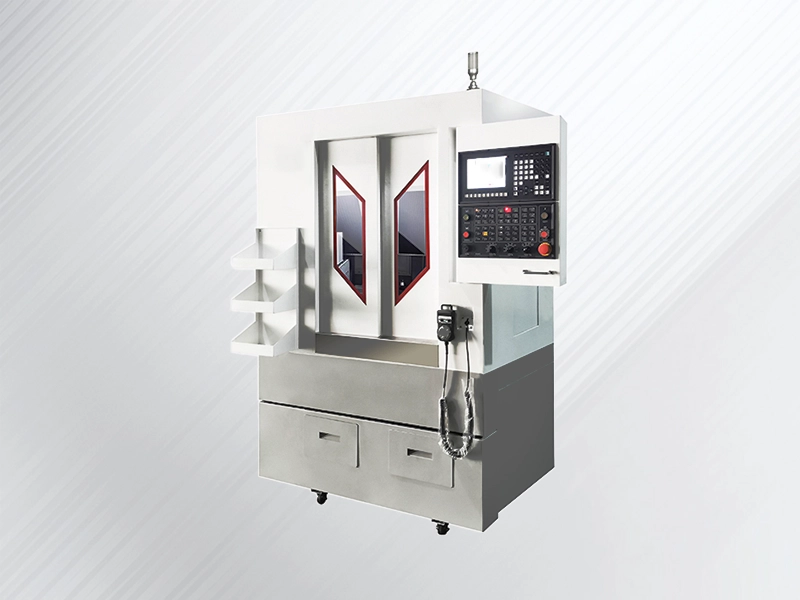
For shops that need heavy milling capability but also finer detail work, heavy-duty engraving and milling machines offer a practical bridge between a full-size machining center and a precision engraver.
CNC Engraving Machines
At the other end of the spectrum are CNC engraving machines. These are designed for fine detail—lettering, patterns, electrode machining, and precise surface texturing.
Engraving machines run at high spindle speeds, typically 24,000 to 36,000 RPM, allowing them to use small-diameter tools and achieve smooth finishes. They’re common in mold texturing, jewelry making, and serial number engraving.
For manufacturers looking for high-speed engraving in a compact machine, a high-speed engraving machine delivers the precision and surface quality required for detailed work.
CNC Engraving and Milling Machines
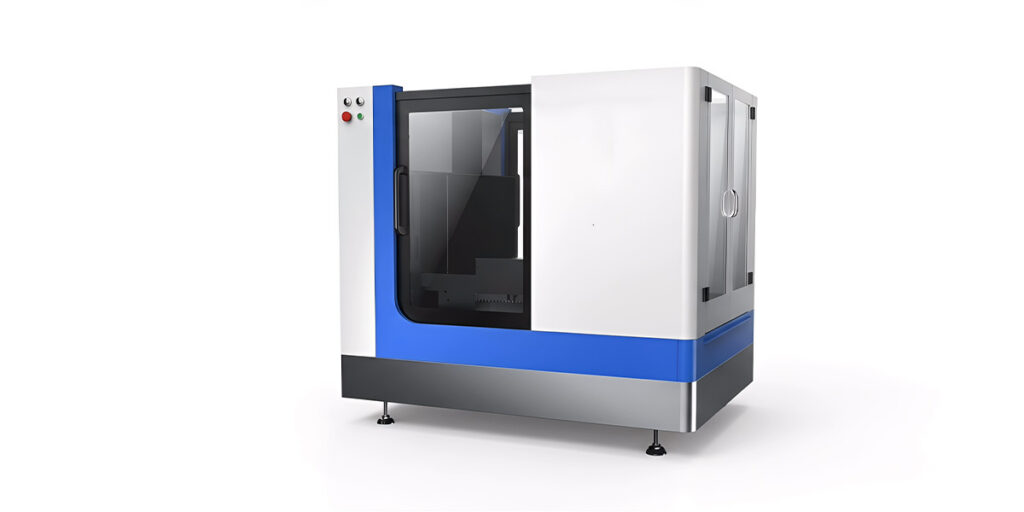
This category is where many shops find the ideal balance. CNC engraving and milling machines are hybrids that combine the precision of an engraver with the material removal capability of a mill.
What does that mean in practice? You can handle both fine detail work and moderate-duty milling in a single setup. Engrave lettering on a part, then switch tools and cut a pocket—all without moving the workpiece to a different machine.
For small to medium-sized manufacturers, this versatility is a major advantage. Instead of investing in two separate machines, you get one piece of equipment that covers:
- Aluminum housings for electronics (3C industry)
- Mold inserts and precision components
- Technical ceramics and composites
- Prototypes and short-run production
These machines are typically built with cast iron beds for stability, high-speed spindles, and precision ball screw drives. They deliver the accuracy you’d expect from a milling machine while maintaining the fine control required for engraving.
For manufacturers who need both milling and engraving capability without dedicating separate equipment, a standard engraving and milling machine is often the most practical choice.
Other CNC Machine Types
Beyond these three, there are specialized CNC machines worth knowing:
- CNC lathes perform turning operations—the workpiece rotates while a stationary cutting tool shapes it. Well suited for producing round components such as shafts, sleeves, and threaded parts.
- CNC routers are typically used for wood, plastics, composites, and soft metals. Common in woodworking, sign making, and panel processing.
- CNC grinding machines achieve extremely fine surface finishes and tight tolerances on hardened materials.
Each type serves a specific role. The right choice depends on your materials, part complexity, and production volume.
Complete CNC Machines Type Table
| Type | Key Differences | Core Advantages | Typical Applications | Common Materials |
| CNC Milling Machine | Rotating cutting tool removes material from stationary workpiece. Available in 3‑axis, 4‑axis, and 5‑axis configurations. | High rigidity, excellent material removal rate, good surface finish, handles hard materials well. | Mold bases, engine components, aerospace structural parts, industrial tooling, complex 3D contours. | Steel, stainless steel, aluminum, titanium, cast iron, brass, plastics. |
| CNC Engraving Machine | High-speed spindle (24,000–36,000 RPM) with small-diameter tools. Focuses on fine detail rather than heavy removal. | Exceptional surface finish, high precision for fine features, low cutting forces. | Text engraving, decorative patterns, copper electrodes, mold texturing, jewelry, serial numbers. | Aluminum, brass, copper, plastics, acrylic, wood, graphite. |
| CNC Engraving and Milling Machine (Hybrid) | Combines engraving precision with moderate milling capability. Single machine handles both detail work and material removal. | Versatile, reduces equipment investment, saves floor space, ideal for job shops and small to medium production. | 3C electronic housings, precision mold components, prototypes, technical ceramics, composite parts, short-run production. | Aluminum, brass, plastics, composites, ceramics, mild steel. |
| CNC Lathe (Turning Center) | Workpiece rotates while stationary cutting tool shapes it. Ideal for cylindrical or axisymmetric parts. | Excellent for round parts, high material removal rates, good surface finish, can include live tooling for milling operations. | Shafts, bushings, threaded components, pulleys, flanges, custom fasteners, automotive parts. | Steel, stainless steel, aluminum, brass, titanium, plastics. |
| CNC Router | Typically lighter construction than mills. Uses high-speed spindle for cutting sheet materials and softer workpieces. | Fast cutting speeds, large work area, cost-effective for sheet processing, good for 2D and 2.5D profiling. | Woodworking, sign making, plastic sheet fabrication, composite panel processing, foam modeling, soft metal cutting. | Wood, MDF, acrylic, plastics, composites, aluminum sheet, foam. |
| CNC Grinding Machine | Uses abrasive wheels to remove material. Achieves extremely tight tolerances and superior surface finishes. | Exceptional surface finish (Ra <0.1 µm), high precision (±0.001 mm), handles hardened materials. | Precision molds, cutting tools, bearing components, automotive parts requiring fine finishes, medical instruments. | Hardened steel, tool steel, ceramics, carbide, glass. |
| EDM Machine (Electrical Discharge Machining) | Uses electrical sparks to erode material. Non-contact process, ideal for hard materials and complex cavities. | Can machine hardened materials, no mechanical cutting forces, excellent for deep cavities and sharp internal corners. | Mold cavities, injection mold inserts, die casting dies, intricate holes, aerospace components. | Hardened steel, carbide, titanium, exotic alloys, conductive materials. |
| CNC Laser Cutting Machine | Uses focused laser beam to cut, engrave, or mark. High speed, narrow kerf, minimal heat-affected zone. | Fast cutting speeds, no tool wear, high precision, excellent for thin materials and intricate profiles. | Sheet metal fabrication, signage, medical device components, electronics enclosures, marking and engraving. | Steel, stainless steel, aluminum, acrylic, wood, plastics, textiles. |
| CNC Plasma Cutter | Uses ionized gas (plasma) to cut conductive materials. Faster than laser for thick plates. | High cutting speed for thick plates, cost-effective, portable options available. | Heavy plate fabrication, structural steel cutting, shipbuilding, industrial equipment manufacturing. | Steel, stainless steel, aluminum, copper, brass (conductive metals). |
| CNC Waterjet Cutter | Uses high-pressure water mixed with abrasive to cut. No heat-affected zone, cuts almost any material. | No thermal distortion, cuts thick materials, versatile across material types, no tool changes. | Aerospace composites, stone countertops, thick metal plates, glass, rubber gaskets, multi-material stacks. | Metal, stone, glass, composites, ceramics, rubber, foam, plastics. |
For many shops—especially those handling both detailed engraving and standard milling tasks—the CNC engraving and milling machine category offers the best balance of versatility, precision, and value.
What Are CNC Machines Used For?
CNC technology plays a central role in today’s manufacturing processes. You’ll find them in nearly every industry that produces precision parts.
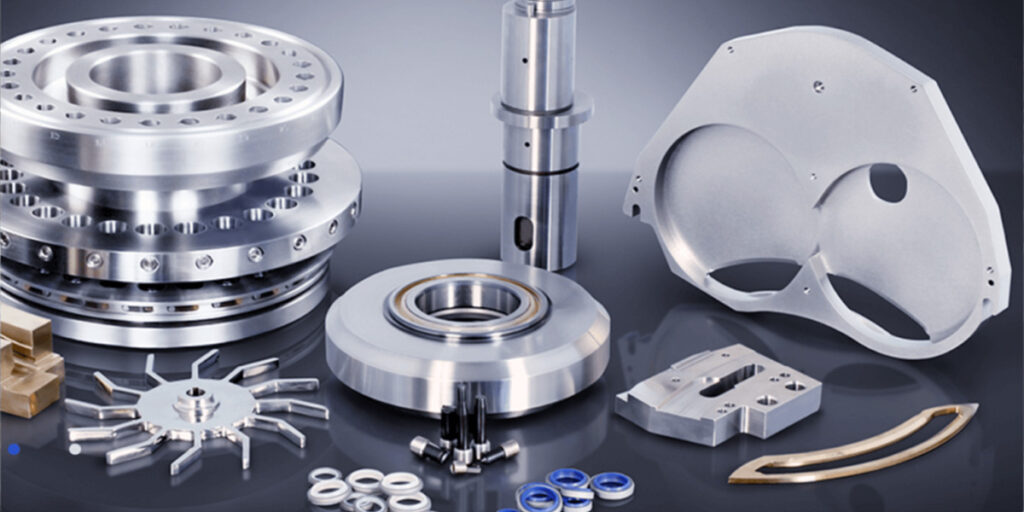
- Mold Manufacturing – CNC machining is widely used to produce injection molds, die-casting tools, and stamping dies, especially for parts that require intricate geometries and high accuracy.
- Metal Parts Machining – From brackets to engine components, CNC delivers consistent accuracy for both prototypes and production runs.
- 3C Electronics – Smartphone enclosures, laptop housings, and heat sinks are commonly machined from aluminum. Thin walls and fine details demand both speed and precision.
- Automotive & Aerospace – Engine blocks, structural frames, turbine blades—industries that can’t compromise on reliability depend on CNC.
- Medical and New Energy – Applications such as surgical tools, orthopedic components, and battery parts depend on CNC machining for consistent quality and reliable repeatability.
CNC machines handle a wide range of materials: aluminum, steel, titanium, plastics, composites, and ceramics.
For precision work like mold texturing and fine detailing, a high-speed engraving machine delivers the accuracy required.
How to Choose the Right CNC Machine
No single CNC machine works for every shop. The right choice depends on what you make, what materials you cut, and how you run production. Here’s a practical way to narrow down your options.
For Precision Work
If your work involves fine details—small lettering, electrode machining, intricate patterns—precision matters more than raw power. Look for machines with high spindle speeds (24,000 RPM and above) and the ability to use small-diameter tools. A stiff structure helps maintain accuracy on delicate features.
For this category, a high-speed engraving machine is often the best fit. It delivers the spindle speed and precision required for detailed work without over-investing in capacity you don’t need.
For General Machining
Many shops need a machine that handles a mix of work: aluminum housings, prototypes, moderate milling, and occasional engraving. Versatility becomes the priority. You want something that mills when you need it and engraves when you don’t.
For general machining, a standard engraving and milling machine offers the best balance. It handles both tasks in one setup, saves floor space, and covers most daily work without requiring multiple machines.
For Mold and Heavy Cutting
f your work involves hardened steels, large mold bases, or continuous heavy cutting, rigidity is non-negotiable. Look for cast iron construction, robust spindles, and precision ball screw drives. Machines in this category need to absorb vibration and maintain accuracy under heavy loads.
For demanding applications like mold making and steel cutting, a heavy-duty engraving and milling machine provides the structural stability and cutting capability required for consistent results.
A Quick Selection Framework
Whichever category fits your work, keep these factors in mind:
- Material – Hard metals need rigid machines. Softer materials and plastics are more forgiving.
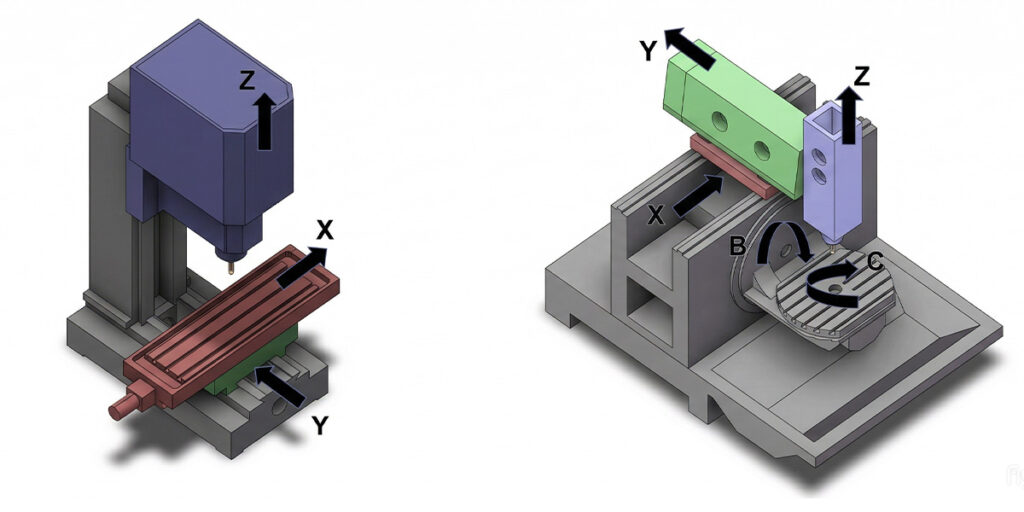
- Part complexity – 3-axis covers most work. 4‑axis or 5‑axis becomes necessary for complex geometries.
- Volume – High production benefits from automatic tool changers and reliable automation.
- Accuracy – For precision work, look for repeatability in the ±0.003mm range.
The best machine isn’t the most expensive one—it’s the one that matches your actual production requirements.
Conclusion
CNC machines are at the heart of modern manufacturing, helping engineers and manufacturers achieve high precision, efficiency, and consistent quality. Choosing the right machine depends on factors such as material type, part complexity, required precision, production volume, and budget.
Selecting the right CNC solution can significantly improve productivity while reducing costs and errors. To ensure long-term reliability, it’s also important to work with trusted suppliers who provide ongoing support.
If you’re looking to optimize your production process or need guidance on which CNC machine fits your workshop best, contact us today—our experts can help you find the solution that meets your specific needs.
Frequently Asked Questions
Initial costs include the machine price, installation, tooling, and workholding. Operating costs cover electricity, tool wear, coolant, and routine maintenance. Energy-efficient designs—like those in Zelatec machines—help reduce long-term power consumption. A realistic estimate also accounts for training and spare parts.
Check two specifications: positioning accuracy and repeatability. Repeatability—often stated as ±0.003mm—tells you how consistently the machine returns to the same point. Also look at backlash compensation on ball screw drives. For precision work, a machine with verified repeatability is essential.
For metals, moderate speeds with controlled feeds work best. Plastics can run at higher speeds to prevent melting. Ceramics require conservative speeds and rigid setups to avoid chipping. Always start with tool manufacturer recommendations and adjust based on actual results and surface finish.
Yes. Most modern CNC machines support automation integration. Features like automatic tool changers, pallet changers, and standardized interfaces allow connection to robotic arms or AGVs. Discuss your production volume with the supplier to ensure the control system supports the level of automation you need.
A reliable supplier provides installation assistance, operator training, and ongoing technical support. Look for responsive remote diagnostics, spare parts availability, and applications engineering to help with programming or process optimization. Long-term support is as important as the machine itself.