Hard and brittle materials such as silicon, silicon carbide (SiC), sapphire, advanced ceramics, glass, quartz, and crystal are widely used in semiconductor, photovoltaic, optical, electronic, and advanced manufacturing applications. Their useful properties also make them difficult to process: they resist deformation but can fracture suddenly when cutting forces become too high.
This combination creates several common problems, including edge chipping, microcracks, subsurface damage, material loss, tool wear, and inconsistent surface quality. Choosing an appropriate cutting method and controlling the cutting process are therefore important for both product quality and production cost.
This guide explains what makes hard and brittle materials difficult to cut, compares common cutting methods, and discusses how diamond wire sawing can provide a controlled approach for precision cutting. It also covers key process parameters and machine options for different materials and applications.
What Are Hard and Brittle Materials?
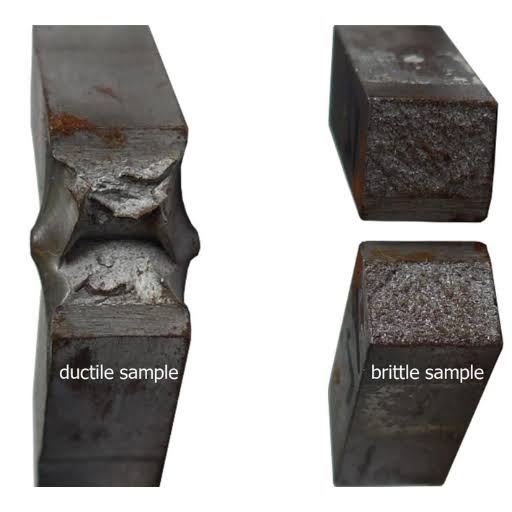
Hard and brittle materials are materials that combine relatively high resistance to deformation with limited ability to undergo plastic deformation before fracture.
Hardness describes a material’s resistance to indentation, scratching, and permanent deformation. A harder material generally requires greater effort to remove during machining and can cause faster wear of conventional cutting tools.
Brittleness describes a material’s tendency to fracture with relatively little plastic deformation. Instead of gradually changing shape under load, a brittle material can develop a crack and fail when local stress exceeds its fracture resistance.
This combination creates the central machining challenge:
Hardness makes the material difficult to remove, while brittleness makes it easy to damage during material removal.
For this reason, cutting hard and brittle materials is not simply a matter of using a harder cutting tool. The cutting force, contact conditions, material properties, cooling, and process parameters all affect the final result.
Common Hard and Brittle Materials
Hard and brittle materials are found across many industries. Their cutting requirements vary considerably depending on their hardness, fracture behavior, crystal structure, workpiece size, and final application.
Silicon
Silicon is one of the most important hard and brittle materials in modern manufacturing. It is widely used in semiconductor devices and photovoltaic products and is commonly processed from silicon ingots into thin wafers.
When cutting silicon, manufacturers need to consider wafer thickness, surface quality, kerf loss, warpage, and subsurface damage. Diamond wire sawing is widely used for silicon wafer slicing because it can provide a narrow and controlled cutting path.
For applications involving silicon wafers and ingots, see the Silicon Wafer & Ingot Cutting Machine.
Silicon Carbide
Silicon carbide is a very hard material used in power electronics, semiconductor devices, high-temperature components, and other demanding applications.
Its high hardness makes material removal difficult, while its brittle behavior increases the risk of cracking and surface damage. Cutting SiC therefore requires careful control of wire condition, feed rate, cutting speed, and other process parameters.
For high-precision cutting applications, the High Precision Endless Diamond Wire Saw Cutting Machine can be considered for suitable SiC workpieces.
Sapphire
Sapphire combines high hardness with brittleness and is used in optical components, semiconductor applications, LED-related products, and other technical applications.
The cutting process needs to control edge chipping, cracking, surface damage, and material loss. Diamond wire cutting is one of the established approaches for machining sapphire and other hard crystalline materials.
For sapphire and related crystalline materials, see the Ceramic & Crystal & Sapphire Cutting Machine.
Advanced Ceramics
Advanced ceramics include materials such as alumina, zirconia, and silicon nitride. These materials are valued for properties such as hardness, wear resistance, chemical stability, and temperature resistance.
Those same properties can make conventional machining difficult. Cutting ceramic components requires attention to surface damage, chipping, tool wear, and dimensional accuracy.
Optical Glass and Quartz
Optical glass and quartz are used in lenses, windows, optical instruments, semiconductor-related equipment, and other precision applications.
Although glass is not as hard as every ceramic or semiconductor material, its brittle fracture behavior makes clean cutting challenging. Poor cutting conditions can create edge damage, cracks, or defects that increase downstream grinding and polishing requirements.
For these applications, see the Optical & Quartz Glass Endless Wire Cutting Machine.
Crystal and Graphite
Other materials, including technical crystals and graphite, can also require controlled cutting methods depending on the workpiece and application.
For crystal-based materials, the Ceramic & Crystal & Sapphire Cutting Machine provides a dedicated equipment option. For graphite components, the Graphite Wire Saw Cutting Machine can be considered for suitable cutting applications.
Why Are Hard and Brittle Materials Difficult to Cut?
The main challenge comes from the way these materials respond to mechanical and thermal loads.
1. High Cutting Resistance
Hard materials resist indentation and material removal. A cutting tool must generate sufficient contact force to remove material, and this can increase mechanical load on the cutting system.
High cutting resistance may also accelerate abrasive or tool wear. As the cutting tool changes over time, cutting performance and surface quality can become less consistent.
2. Low Tolerance for Local Stress
Brittle materials have limited capacity for plastic deformation. When local stress becomes too high, a crack can initiate and then propagate through the material.
The basic failure sequence can be simplified as:
Local stress → crack initiation → crack propagation → chipping or fracture
This is particularly important for thin wafers, crystals, glass, sapphire, and ceramic components where even small defects can affect the final product.
3. Edge Chipping and Microcracks
Edge chipping is one of the most visible problems when cutting brittle materials. Microcracks can be even more difficult to detect because they may extend below the visible cutting surface.
These defects matter because a component can appear acceptable immediately after cutting but still contain damage that affects later grinding, polishing, bonding, or service life.
Research on hard and brittle material machining identifies surface and subsurface cracks, edge breakage, and related damage as major processing concerns.
4. Subsurface Damage
Cutting quality cannot be evaluated only by looking at the surface.
Mechanical interaction between the abrasive and workpiece can create a damaged layer below the cutting surface. Depending on the material and process conditions, this can include microcracks, residual stress, and subsurface fractures.
For semiconductor and optical materials, controlling this damage is particularly important because later processes may need to remove the damaged layer.
5. Heat and Thermal Stress
Although many wire sawing processes are considered relatively low-heat machining methods compared with thermal cutting, heat is still generated at the cutting interface.
Insufficient cooling or unsuitable process parameters can increase temperature in the cutting zone. For sensitive materials, thermal effects can contribute to dimensional changes, surface defects, or additional stress.
6. Kerf Loss and Material Waste
Every cutting method removes some material and creates a cutting gap, or kerf.
For low-cost materials, a small increase in kerf may not be a major concern. For high-value materials such as silicon, sapphire, and SiC, however, material loss can directly affect production economics.
This is why material loss is not only a technical issue—it is a cost issue.
Recent reviews of diamond wire sawing specifically identify kerf-loss reduction as an important area for improving wafering efficiency and material utilization.
Common Cutting Methods for Hard and Brittle Materials
There is no single cutting method that is best for every hard and brittle material. The right choice depends on the material, geometry, required precision, production volume, and acceptable surface damage.
Blade Sawing
Blade sawing is a well-established method and can be suitable for many industrial materials.
Its advantages include familiar equipment, straightforward operation, and suitability for certain larger or less demanding cutting applications.
However, blade-based processes can involve relatively high cutting forces, larger kerfs, tool wear, and a risk of edge chipping depending on the material and cutting conditions.
Grinding and Abrasive Machining
Grinding is widely used when surface finishing and controlled material removal are important.
It can provide good dimensional control, but grinding is often better suited to finishing or controlled removal than to high-volume material separation. Excessive grinding can also introduce surface or subsurface damage if process conditions are not well controlled.
Laser Cutting
Laser cutting is a non-contact process and can provide precise positioning and localized energy input.
For suitable materials and geometries, this can be an advantage. However, laser processing involves thermal energy, so heat-affected zones, thermal stress, or material-specific limitations need to be considered.
Diamond Wire Sawing
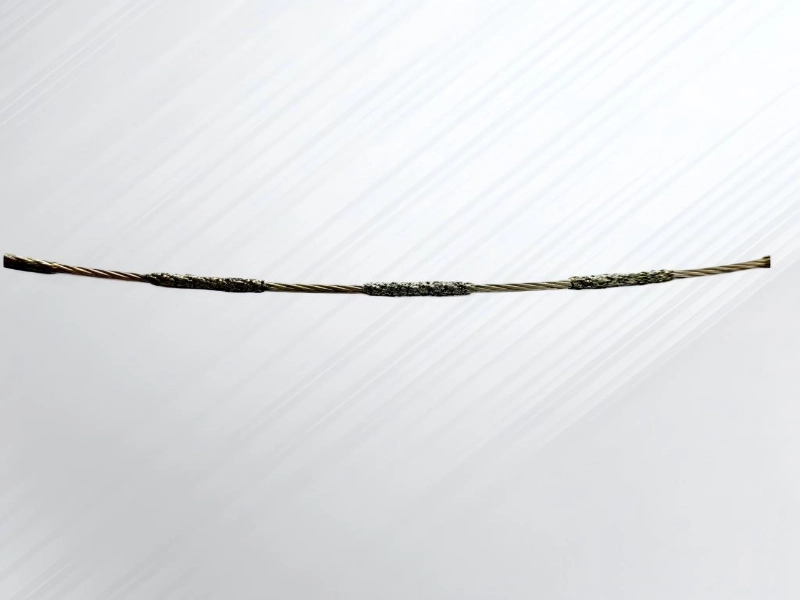
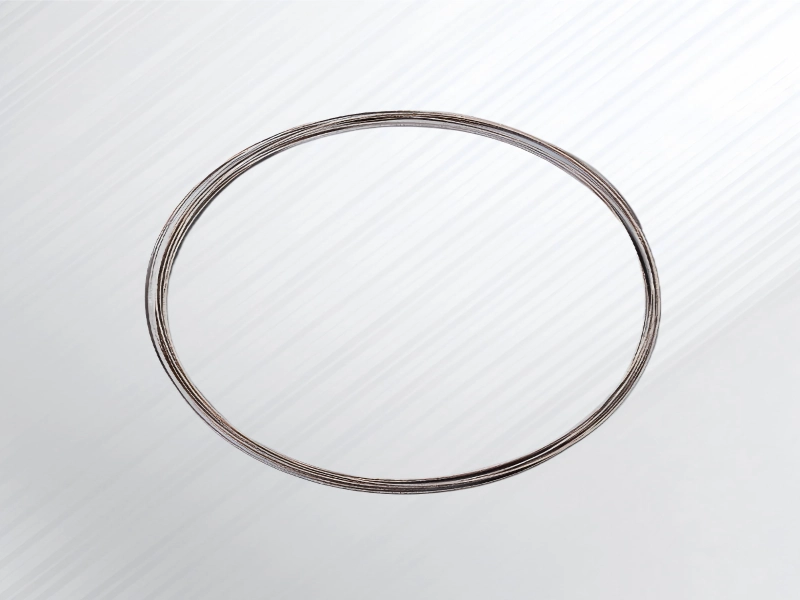
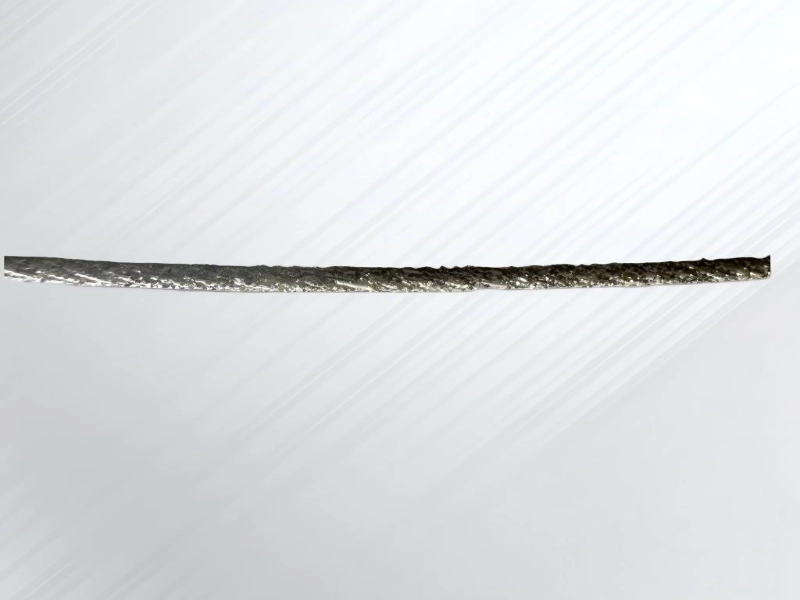
Diamond wire sawing uses abrasive particles fixed to a thin wire to remove material through repeated contact between the diamond abrasives and the workpiece.
It is widely used for slicing hard and brittle materials including silicon, SiC, and sapphire. Research literature has also examined its application to other difficult-to-cut materials and the effects of wire speed, feed rate, wire tension, abrasive characteristics, and cooling conditions.
Why Use Diamond Wire Sawing for Hard and Brittle Materials?
Diamond wire sawing is not a solution that removes every cutting challenge. Its main value is that it provides a controlled abrasive cutting process that can be adapted to a wide range of hard and brittle materials.
Reduced Kerf Loss
A relatively thin diamond wire can create a narrow cutting path. Reducing kerf loss can be particularly valuable when processing expensive materials or thin wafers.
The semiconductor industry has continued to develop finer diamond wires partly to improve material utilization and wafer yield. A 2026 review identifies thinner wafers and finer diamond wires as important developments in semiconductor wafer slicing.
Controlled Cutting Force
Cutting force is affected by many variables, including material properties, abrasive characteristics, wire speed, feed rate, wire tension, and the condition of the cutting wire.
Proper parameter selection can help maintain stable cutting conditions and reduce the likelihood of excessive mechanical loading.
Reduced Risk of Chipping and Cracking
Diamond wire cutting does not automatically eliminate cracking or chipping. However, a properly selected wire and well-controlled cutting process can help manage the mechanical interaction between the abrasive and workpiece.
For brittle materials, the goal is not simply to cut faster. It is to achieve a suitable balance between productivity and controlled material removal.
Suitable for Hard Materials
Diamond abrasives are well suited to difficult-to-machine materials. Diamond wire sawing has been widely studied and used for silicon, silicon carbide, sapphire, and other hard and brittle materials.
Good Surface Quality Potential
Surface quality depends strongly on the material, abrasive properties, wire condition, machine setup, and cutting parameters.
A stable cutting process can reduce the severity of cutting marks and help control surface and subsurface damage. The objective is often to reduce the amount of downstream grinding or polishing required rather than expecting the cutting process alone to create a final polished surface.
Hard and Brittle Materials: Cutting Method Comparison
| Cutting Method | Mechanical Cutting Force | Kerf Loss | Thermal Effects | Typical Applications |
|---|---|---|---|---|
| Blade Sawing | Medium to High | Medium to High | Low to Medium | General industrial cutting, ceramics, glass |
| Grinding / Abrasive Machining | High at contact points | Medium | Low to Medium | Finishing, precision material removal |
| Laser Cutting | Low mechanical force | Low | Potentially High | Selected glass and other suitable materials |
| Diamond Wire Sawing | Controlled | Low | Generally Low with proper cooling | Silicon, SiC, sapphire, ceramics, glass and other hard materials |
The comparison above is a general guide rather than a universal performance ranking. Actual results depend on workpiece geometry, material condition, wire specifications, machine settings, and production requirements.
How Does Diamond Wire Cutting Reduce Cracking and Chipping?
Successful cutting of brittle materials depends heavily on process control. Several parameters deserve particular attention.
Wire Tension
Wire tension needs to be stable and appropriate for the machine and cutting application.
Excessive tension can increase mechanical stress and may increase the risk of wire breakage. Insufficient tension can allow unstable wire movement, which may affect cutting accuracy and surface quality.
The goal is consistent wire behavior throughout the cutting process.
Wire Speed
Wire speed affects cutting efficiency, abrasive interaction, heat generation, and wire wear.
A higher speed may improve productivity in suitable applications, but simply increasing speed does not guarantee a better result. The correct range depends on the material and the characteristics of the diamond wire.
Feed Rate
Feed rate determines how quickly the workpiece moves into the cutting zone.
A higher feed rate can increase productivity, but excessive feed force can increase the risk of chipping, cracking, and poor surface quality. A lower feed rate may improve process stability but reduce throughput.
The practical goal is to find a feed rate that provides stable material removal without excessive cutting force.
Cooling
Cooling helps manage heat generated at the cutting interface and can contribute to more stable machining conditions.
Cooling also works together with debris removal. The exact coolant and delivery method should be selected according to the material, machine, and process requirements.
Debris Removal
Cutting produces fine particles and debris. If they remain concentrated in the cutting zone, they can interfere with the cutting interface and affect surface quality.
Effective cooling and flushing can help carry debris away from the cutting area and maintain more consistent cutting conditions.
Research on diamond wire sawing confirms that process parameters and cooling conditions can influence surface quality, temperature, kerf loss, warpage, cracking, and wire wear.
Diamond Wire Sawing for Different Hard and Brittle Materials
Different materials have different cutting requirements, so machine selection should start with the workpiece rather than the machine name.
Silicon and Silicon Ingots
For silicon ingots and wafers, priorities may include low kerf loss, controlled wafer thickness, low damage, and stable production.
The Silicon Wafer & Ingot Cutting Machine is designed around this type of material-specific application.
Silicon Carbide
SiC requires a cutting process capable of handling high hardness while maintaining stable material removal.
For suitable applications that require high precision and controlled cutting, consider the High Precision Endless Diamond Wire Saw Cutting Machine.
Sapphire
Sapphire requires careful attention to cracking, chipping, surface quality, and dimensional accuracy.
The Ceramic & Crystal & Sapphire Cutting Machine is a suitable product option for sapphire-related cutting requirements.
Ceramics
Advanced ceramics such as alumina and zirconia can benefit from controlled abrasive cutting when dimensional accuracy and edge quality are important.
The Ceramic & Crystal & Sapphire Cutting Machine can be considered for suitable ceramic workpieces.
Optical Glass and Quartz
Optical glass and quartz applications often place greater emphasis on surface quality and controlled cutting damage.
For these applications, see the Optical & Quartz Glass Endless Wire Cutting Machine.
Graphite
Graphite is used in industrial, semiconductor, and high-temperature applications. Depending on workpiece geometry and material requirements, controlled wire cutting can be used for component preparation and material separation.
For dedicated graphite applications, see the Graphite Wire Saw Cutting Machine.
How to Choose a Cutting Method for Hard and Brittle Materials
Choosing the right equipment starts with understanding the actual cutting requirement.
1. Identify the Material
Silicon, SiC, sapphire, ceramic, glass, quartz, crystal, and graphite do not behave in exactly the same way during cutting.
Start with the material’s hardness, brittleness, fracture behavior, dimensions, and application requirements.
2. Consider Workpiece Size
A small laboratory sample has very different equipment requirements from a large industrial workpiece.
For research, sample preparation, and small components, a Small Desktop Diamond Wire Saw Cutting Machine may be appropriate.
For larger workpieces, a Medium-sized Diamond Wire Saw Cutting Machine or Large-sized Diamond Wire Saw Cutting Machine may offer a better fit.
3. Define the Required Accuracy
Consider:
- Dimensional accuracy
- Surface roughness
- Thickness variation
- Edge quality
- Subsurface damage
The more demanding the final application, the more important process stability becomes.
4. Consider Material Loss
For expensive materials, kerf loss can have a direct effect on production cost.
A narrow cutting path may help improve material utilization, especially when the workpiece is valuable or when thin sections are required.
5. Consider Production Volume
Laboratory and prototype applications may prioritize flexibility and ease of setup, while production environments may prioritize cutting speed, repeatability, automation, and operating efficiency.
The machine should therefore be selected based on the complete process rather than one specification alone.
Applications of Hard and Brittle Material Cutting
Precision cutting of hard and brittle materials supports a wide range of industries.
Semiconductor Manufacturing
Silicon, SiC, sapphire, and other crystalline materials are used in semiconductor-related applications. Wire sawing is particularly important for wafer and substrate preparation.
Photovoltaic Manufacturing
Crystalline silicon is a major photovoltaic material, and wafer slicing is an important step in the manufacturing process.
Reducing kerf loss and maintaining wafer quality can directly affect material utilization and manufacturing economics.
Optical Industry
Optical glass, quartz, sapphire, and crystal materials are used in lenses, windows, optical components, and precision instruments.
These applications often require controlled cutting to limit chipping and surface damage before subsequent grinding and polishing.
Advanced Ceramics
Technical ceramics are used in applications requiring hardness, wear resistance, thermal performance, or chemical stability. Controlled cutting is important when components require tight dimensional control.
Industrial and High-Temperature Materials
Graphite and other difficult-to-machine materials are used in industrial and high-temperature environments where conventional cutting methods may not always provide the required combination of accuracy, material utilization, and process control.
Frequently Asked Questions
What are hard and brittle materials?
Hard and brittle materials have high resistance to deformation and limited ability to undergo plastic deformation before fracture. Common examples include silicon, silicon carbide, sapphire, ceramics, glass, quartz, and some crystals.
Why are hard and brittle materials difficult to cut?
Their high hardness increases cutting resistance, while their brittleness makes them vulnerable to cracking and chipping. Cutting can also create subsurface damage, heat, tool wear, and material loss.
What is the best method for cutting hard and brittle materials?
There is no single best method for every material. Blade sawing, grinding, laser processing, and diamond wire sawing each have suitable applications. The choice should consider material properties, workpiece size, required accuracy, surface quality, production volume, and acceptable material loss.
How can brittle materials be cut without cracking?
Cracking cannot always be completely eliminated, but the risk can be reduced by controlling cutting force, feed rate, wire speed, wire tension, cooling, and debris removal. Material properties and workpiece geometry also need to be considered.
Can a diamond wire saw cut silicon?
Yes. Diamond wire sawing is widely used for slicing silicon ingots into wafers and is an established technology in semiconductor and photovoltaic manufacturing.
Can diamond wire sawing cut sapphire and silicon carbide?
Yes. Diamond wire sawing has been widely studied and used for hard and brittle materials including sapphire and SiC. However, the appropriate wire specification and process parameters depend on the material and workpiece requirements.
What factors affect diamond wire cutting quality?
Important factors include wire speed, feed rate, wire tension, diamond abrasive characteristics, cooling, material properties, crystal orientation, and workpiece geometry. These parameters interact with one another, so changing one parameter may affect cutting force, surface quality, wire wear, and material loss.
Conclusion
Hard and brittle materials are essential to many modern industries because their mechanical, optical, thermal, and electrical properties enable demanding applications. At the same time, their high hardness and limited fracture tolerance make cutting more difficult than conventional material processing.
The main challenges include cracking, chipping, subsurface damage, heat generation, tool wear, and kerf loss. The most suitable cutting method depends on the material and the final application.
Diamond wire sawing provides a controlled abrasive cutting option for many hard and brittle materials, including silicon, silicon carbide, sapphire, ceramics, glass, quartz, crystal, and graphite. Its potential advantages include a narrow cutting path, controlled material removal, and suitability for difficult-to-cut materials. However, good results depend on choosing the right wire, machine, and process parameters rather than relying on the cutting method alone.
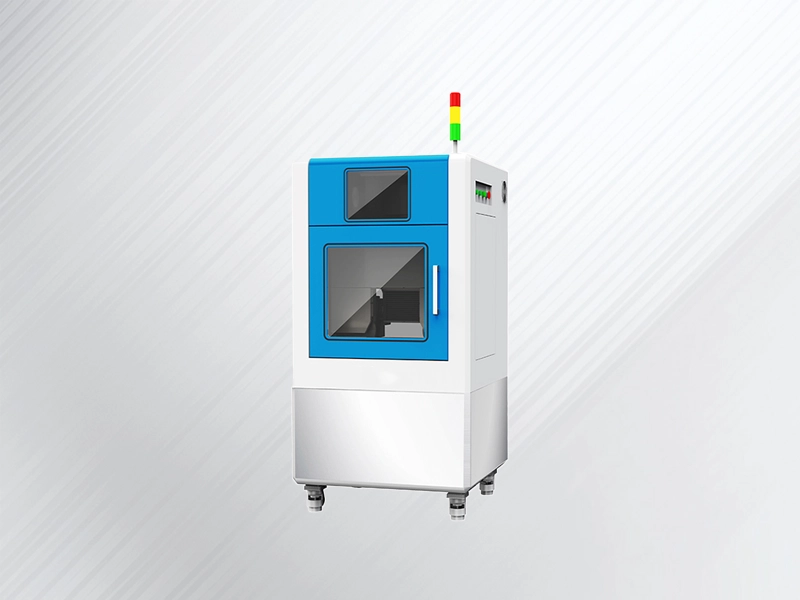
For different workpiece sizes and materials, ZelaTec provides a range of Diamond Wire Cutting Machines, including desktop, medium-sized, large-sized, high-precision endless wire, silicon wafer and ingot, sapphire, optical glass, quartz, ceramic, crystal, graphite, and other application-focused machines.
Explore the Diamond Wire Cutting Machine range to find a configuration suited to your material, workpiece size, accuracy requirements, and production needs, or contact ZelaTec to discuss your cutting application.