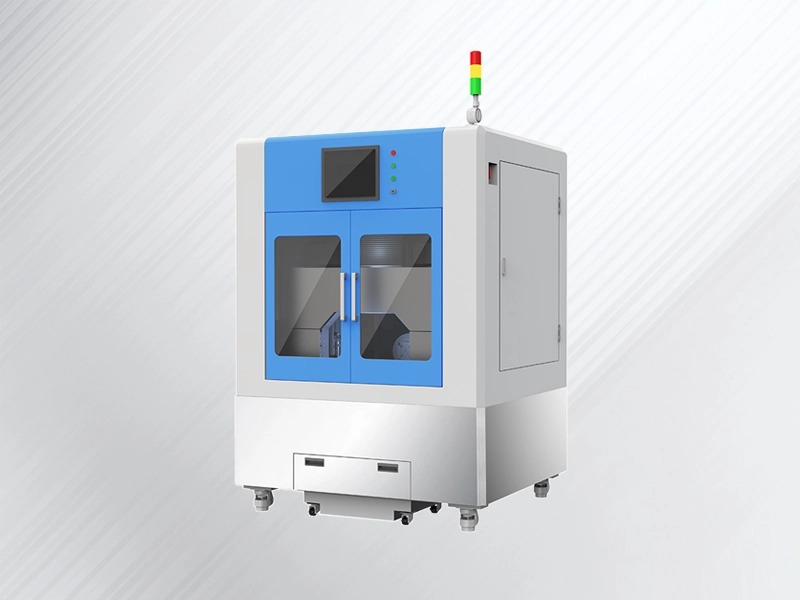
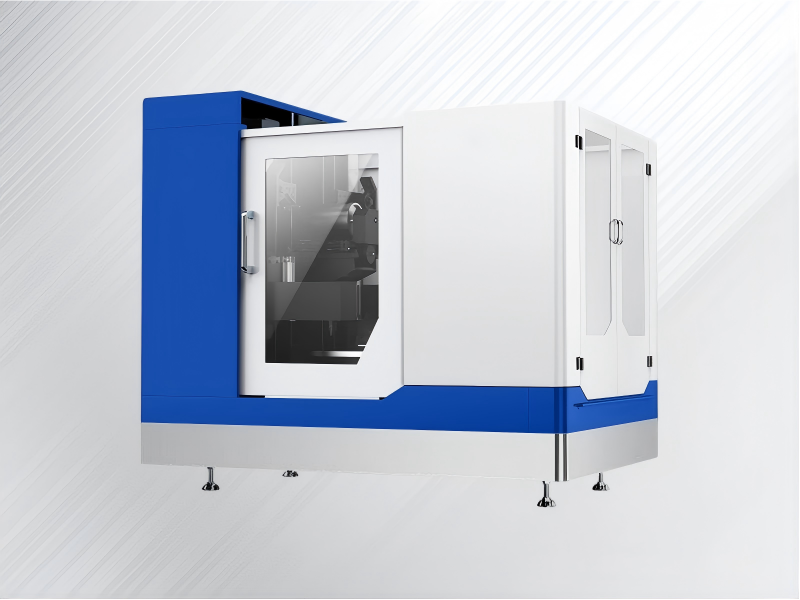
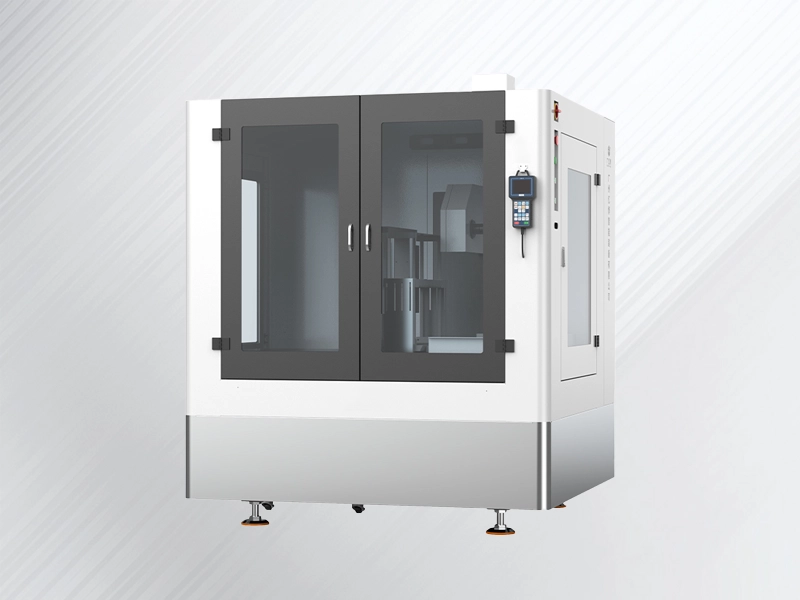
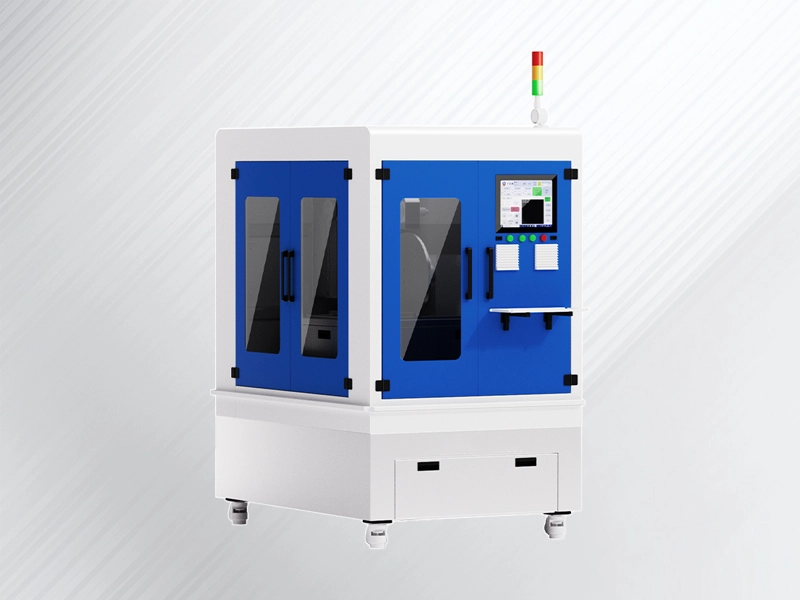
A diamond wire saw is a precision cutting tool that uses a thin wire embedded with diamond abrasives to slice through hard and brittle materials. It is widely used in industries such as semiconductor, photovoltaic, and optical manufacturing, where accuracy and material efficiency are critical. Compared with traditional cutting methods, it offers high precision, low material loss, and better surface quality. In this guide, we’ll explain how a diamond wire saw works, explore its main types, and show where it is used in modern industrial applications.
What Is a Diamond Wire Saw?
In practical engineering terms, a diamond wire saw is a specialized industrial cutting machine that uses a thin, diamond-impregnated wire to “grind” through materials rather than “teeth” to rip them. Think of it as a high-tech version of a bandsaw, but instead of a thick blade, it uses a flexible wire capable of slicing through some of the hardest substances on earth, such as silicon, sapphire, and reinforced concrete.
The machine’s performance relies on several core components working in harmony:
- The Diamond Wire Loop: This is the heart of the system. In modern high-speed setups, an “endless” wire loop rotates at high velocity, providing a continuous, smooth cutting action.
- Drive System: This consists of high-precision motors and pulleys that maintain the wire’s linear speed, ensuring consistent friction against the workpiece.
- Tension Control: Perhaps the most critical technical feature, this system keeps the wire tight enough to cut accurately but flexible enough to avoid snapping under load.
- Coolant System: This manages the heat generated during the process and flushes away “swarf” (material dust) to keep the cut clean.
The primary difference between this and traditional circular or band saws is the kerf width. Because the wire is so thin, you lose far less material to dust. For industries working with expensive crystals or delicate semiconductors, this efficiency isn’t just a bonus—it’s a necessity for profitability.
How Does a Diamond Wire Saw Work?
Basic Working Principle
A diamond wire saw removes material through abrasion, not traditional cutting. The wire is coated with industrial diamond grit—particles far harder than the workpiece. As the wire moves at high speed, these diamond particles grind away microscopic layers of material with each pass. There are no saw teeth ripping through the stock; it’s a controlled grinding action that generates minimal stress on the workpiece.
The wire itself moves in a single direction when configured as a continuous loop, maintaining consistent wire speed—often reaching 60 to 80 meters per second in precision applications. This steady, one-way motion eliminates the back-and-forth vibration found in reciprocating systems, which directly improves cutting accuracy and surface finish.
Coolant plays an equally critical role. A steady flow of water or water-based coolant floods the cutting zone to dissipate heat, flush away swarf, and keep the diamond grit exposed and cutting efficiently. Without proper cooling, the wire would overheat, wear rapidly, and produce rough, unpredictable cuts.
Step-by-Step Cutting Process
1. Material Fixing
The workpiece—whether a silicon ingot, ceramic block, or optical glass—is secured firmly to the machine table or fixture. Any movement during cutting compromises accuracy.
2. Wire Tensioning
The diamond wire is tensioned to a precise specification. Correct tension keeps the wire straight during cutting and prevents deflection that would ruin edge quality.
3. High-Speed Wire Movement
The drive motor spins the wire loop up to its target speed. At this stage, the coolant system activates, ensuring the wire runs wet from the first contact.
4. Controlled Feeding
The workpiece is fed into the moving wire at a carefully regulated feed rate. The operator or CNC program balances speed with cutting accuracy—pushing too fast degrades surface finish; feeding too slowly reduces throughput.
5. Cooling and Debris Removal
Throughout the cut, coolant continuously washes the kerf, carrying away debris and keeping temperatures stable. This step is essential for maintaining consistent surface finish and extending wire life.
6. Completion and Separation
Once the wire passes through the full profile, the part is separated. The resulting cut surface is typically smooth and requires little to no post-processing.
Types of Diamond Wire Saws
Diamond wire saws come in several configurations, each optimized for different applications. Understanding the distinctions helps in selecting the right system for your material and production requirements.
Continuous (Endless / Loop) Wire Saws
A continuous wire saw uses a closed loop of diamond wire with no joint or splice. The wire runs in a single direction at constant speed, driven by a motorized pulley system. Because there is no reciprocation—no starting, stopping, or reversing direction—the cutting action is exceptionally smooth and stable.
Key advantages include higher wire speed (up to 80 m/s in precision systems), superior surface finish, and minimal wire marks on the cut face. The absence of directional change also reduces vibration, which translates into better dimensional accuracy. This configuration is the preferred choice for high-precision applications such as semiconductor wafering, sapphire slicing, and advanced ceramics processing.
Oscillating (Reciprocating) Wire Saws
An oscillating wire saw feeds diamond wire from a supply spool to a take-up spool, with the wire moving back and forth across the workpiece. The wire length can exceed 1,000 meters, allowing for extended cutting runs without frequent wire changes.
The primary limitation lies in the reversal points. Each time the wire changes direction, there is a momentary speed fluctuation that can introduce slight vibration and surface irregularities. Oscillating saws are therefore better suited for large-scale ingot cropping, stone quarrying, and construction demolition—applications where ultra-fine surface finish is secondary to raw cutting capacity.
Single-Wire vs. Multi-Wire Configurations
Single-wire saws use one strand of diamond wire to make one cut at a time. They offer maximum precision and flexibility, making them ideal for laboratory work, prototype development, and small-batch production where each cut may differ in geometry or material.
Multi-wire saws run dozens or even hundreds of parallel wires simultaneously. A single ingot can be sliced into many wafers in one pass. This configuration delivers unmatched throughput and is the industry standard for photovoltaic cell manufacturing and high-volume semiconductor wafer production. The trade-off is higher machine complexity, greater maintenance demands, and a larger footprint.
Horizontal vs. Vertical Wire Saws
The orientation of the wire plane affects both machine footprint and workflow. Vertical wire saws position the wire in a vertical plane, with the workpiece fed horizontally. This layout is common for cutting large ingots and blocks, where gravity helps stabilize the part during feeding.
Horizontal wire saws place the wire in a horizontal plane, with the workpiece fed from above. This configuration is often preferred for smaller, delicate components and applications requiring frequent workpiece changeover. The choice between horizontal and vertical ultimately depends on part geometry, operator access, and available floor space.
Key Advantages of Diamond Wire Sawing
Switching from traditional abrasive blades or band saws to a diamond wire saw offers several game-changing benefits for a production line. In modern manufacturing, these advantages directly translate into lower costs and higher-quality end products.
- Minimal Material Loss (Low Kerf): The most significant advantage is the incredibly thin wire. Because the “kerf” (the width of the cut) is so narrow, you lose far less material to dust. For expensive materials like sapphire, silicon, or rare crystals, this efficiency can save thousands of dollars in raw material costs over time.
- Superior Surface Quality: Because diamond wire saws use a high-speed grinding action rather than a heavy mechanical shearing force, the resulting surface is remarkably smooth. This often eliminates the need for aggressive secondary grinding or polishing, shortening your overall production cycle.
- Unmatched Precision: The flexibility of the wire combined with advanced tension control allows for extremely straight cuts with minimal deviation. This is critical when slicing thin wafers or complex shapes that require tight tolerances.
- Versatility with Hard Materials: If you are working with high hard materials like carbon fiber, ceramics, or reinforced concrete, traditional tools often overheat or dull quickly. Diamond wire handles these with ease, maintaining its cutting efficiency even in the toughest conditions.
- Reduced Heat and Stress: The smaller contact area between the wire and the workpiece generates less heat and mechanical stress. This is vital for fragile or heat-sensitive materials that might otherwise crack or warp during the cutting process.
By investing in diamond wire technology, factories aren’t just buying a machine; they are adopting a cleaner, more precise, and more cost-effective way to handle the world’s most challenging materials.
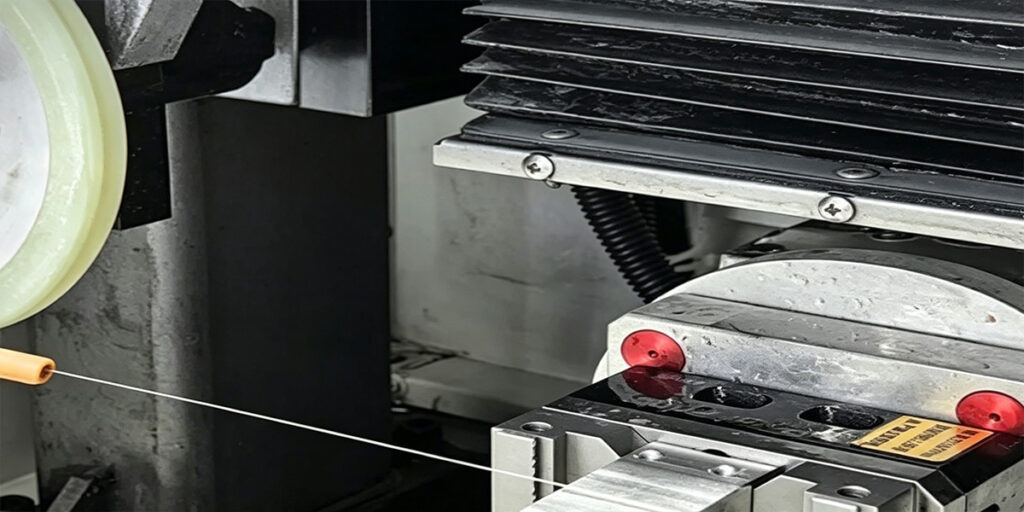
Industrial Applications of Diamond Wire Saw
Diamond wire saws serve a wide range of industries where hard, brittle, or high-value materials demand precision cutting with minimal waste. Below is a breakdown of key applications organized by material type.
Semiconductor and Electronics
Silicon and silicon carbide ingots are sliced into wafers for integrated circuits and power devices. Diamond wire cutting delivers the narrow kerf and low subsurface damage required to maximize yield from expensive single-crystal material. The process is also used for dicing ceramic substrates and sectioning packaged electronic assemblies for failure analysis.
Photovoltaic Manufacturing
Monocrystalline and polycrystalline silicon bricks are cut into thin wafers using multi-wire saws. High throughput and minimal kerf loss directly reduce the cost per watt, making diamond wire the industry standard for solar cell production.
Optics and Photonics
Optical glass, fused silica, sapphire, and infrared crystals such as germanium and zinc selenide are sectioned into blanks for lenses, windows, prisms, and laser components. The smooth as-cut surface shortens lapping and polishing cycles, preserving optical performance.
Advanced Ceramics and Technical Materials
Alumina, zirconia, silicon nitride, aluminum nitride, and boron carbide are cut for applications in aerospace, medical implants, armor systems, and electronic packaging. Diamond wire handles these extremely hard materials without edge chipping or microcracking. Graphite and carbon fiber composites are also cleanly sectioned without delamination or fiber pull-out.
Stone Quarrying and Construction Demolition
Heavy-gauge diamond wire saws are used to extract granite and marble blocks from quarries and to perform precision cuts in reinforced concrete, bridge sections, and building foundations. The method generates significantly less noise, dust, and vibration than conventional demolition techniques, making it ideal for urban job sites and confined spaces.
Research, Geology, and Material Science
Benchtop diamond wire saws section delicate samples—geological cores, mineral specimens, fossils, or biomedical hard tissues—while preserving fine structural detail. The low cutting force and continuous cooling protect fragile specimens from damage.
Materials Requiring Special Consideration
Pure metals and highly ductile alloys are generally not ideal for diamond wire sawing. The diamond grit tends to load with metallic debris, reducing cutting efficiency and wire life. For such materials, alternative methods like EDM or abrasive waterjet may be more suitable.

Cost Factors of Diamond Wire Saw Cutting
Understanding the cost structure of diamond wire cutting helps buyers evaluate total ownership expense rather than upfront price alone. Several factors contribute to the overall cost per cut.
- Machine Cost
The initial capital investment varies widely based on machine configuration—single-wire, multi-wire, or endless loop systems. Precision CNC models with advanced tension control and automation carry higher upfront costs but often deliver lower operating expenses over time through improved yield and reduced labor. - Wire Consumption
Diamond wire is a consumable. Wire life depends on material hardness, cutting speed, and coolant effectiveness. Loop-style wires generally last longer than reciprocating wires due to reduced mechanical fatigue. Tracking wire cost per square meter of material cut provides a clearer picture than wire price alone. - Maintenance
Routine maintenance includes guide pulley replacement, tension system calibration, and coolant filtration. Machines with simpler wire paths and fewer moving components typically incur lower maintenance overhead. - Energy Usage
Diamond wire saws are relatively energy-efficient compared to laser cutting or large grinding systems. The primary electrical loads are the drive motor and coolant pump. - The Metric That Matters: Cost Per Cut
Calculating cost per cut—factoring in wire wear, machine depreciation, labor, and consumables—offers the most accurate basis for comparing different cutting methods. A system with a higher purchase price may still deliver lower cost per cut through faster cycle times and reduced material waste.
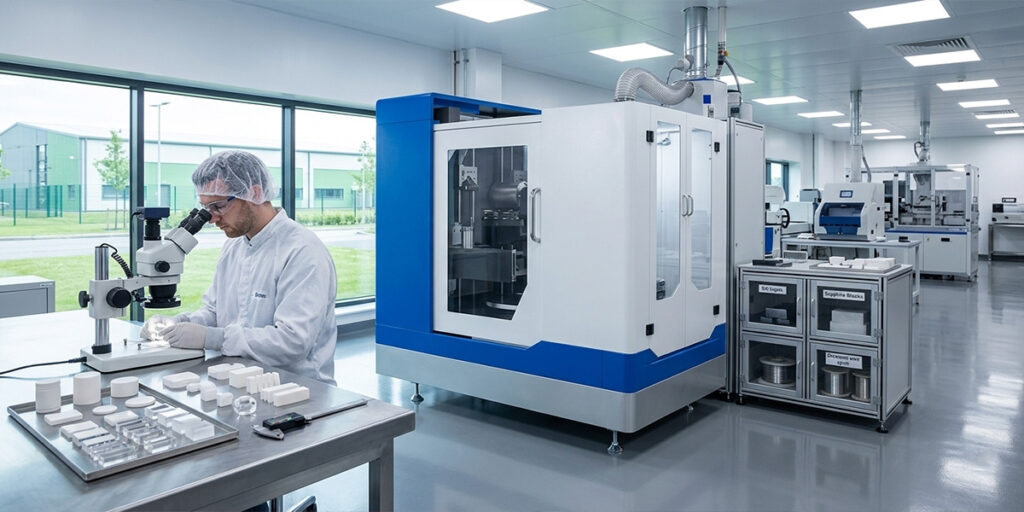
How to Choose the Right Diamond Wire Saw
Selecting the right diamond wire saw requires matching machine capabilities to your material, quality requirements, and production goals. Four key factors should guide your evaluation.
Material Type
The workpiece material determines cutting parameters and wire specifications. Silicon, sapphire, silicon carbide, optical glass, and advanced ceramics all cut efficiently with diamond wire. Graphite and carbon fiber composites require controlled feed rates to prevent delamination. Pure metals and ductile alloys are generally poor candidates—diamond grit tends to load with metallic debris, reducing cutting efficiency and wire life.
Cutting Accuracy Requirements
Precision needs vary widely by application. Semiconductor wafering and optical component sectioning demand tight dimensional tolerances and minimal subsurface damage, requiring CNC-controlled machines with precise tension regulation and fine-diameter wire. For construction demolition or quarrying, accuracy is secondary to raw cutting power, and portable reciprocating systems with heavier wire are the practical choice. Define your tolerance and surface finish targets before evaluating equipment.
Production Volume
Throughput expectations directly influence machine configuration. Single-wire saws offer maximum flexibility and are well-suited for R&D, prototyping, and low-volume production where workpieces vary frequently. Multi-wire saws are built for high-volume manufacturing—they slice entire ingots into dozens or hundreds of wafers in a single pass, making them essential for photovoltaic and semiconductor mass production.
Wire Type Selection
Wire configuration affects both cut quality and operating cost. Endless diamond wire loops run continuously in one direction, delivering higher wire speed, superior surface finish, and greater stability—ideal for precision applications where cut quality is paramount. Reciprocating wire systems use long spools of wire that move back and forth; they excel with very large workpieces and in applications where wire consumption cost outweighs surface finish requirements. Matching wire type to your priorities ensures optimal performance and cost per cut.
Zelatec‘s Diamond Wire Saw Solutions: A Technical Overview
Zelatec provides a comprehensive range of diamond wire cutting solutions, consisting of precision diamond wire saws, integrated diamond wire cutting machines, and advanced endless diamond wire loops. These systems are engineered to address the critical challenges of sectioning high-value, hard, and brittle materials with minimal waste and maximum precision.
The table below summarizes the key technical parameters and capabilities of Zelatec.
| Feature/Specification | Technical Data & Capabilities | Notes |
| Cutting Speed | Up to 80 m/s | Enabled by Endless Diamond Wire Loop technology for high throughput |
| Kerf Loss | As narrow as 0.3 mm | Minimizes material waste, crucial for expensive materials like SiC and Sapphire |
| Surface Finish | Below 0.2 μm | Reduces or eliminates secondary processing steps like lapping or polishing |
| Positional Tolerance | Within ±0.01 mm to ±0.05 mm | Ensures high dimensional accuracy for precision applications |
| Workpiece Capacity | Up to 900 mm | Industrial-scale systems available for large ingots or components |
| Key Certifications | ISO9001:2024, EU CE | Demonstrates commitment to international quality and safety standards |
| Customization | Tailored wire loops and machine configurations | Bespoke loop circumferences, diamond coating patterns, and machine setups available |
| Manufacturing Scale | 6,000+ sqm facility | Supports stable supply and timely delivery of standard and custom orders |
Common Challenges and Zelatec’s Solutions
In the world of precision slicing, maintaining a perfect balance between speed and stability is notoriously difficult. Operators frequently encounter hurdles that can disrupt production or compromise quality. At Zelatec, we have engineered our machinery to address these specific industrial pain points through advanced hardware and software integration.
- Frequent Wire Breakage: This is often caused by inconsistent tension or poor cooling. Zelatec’s machines utilize a high-precision Automatic Tensioning System (Pneumatic/Servo controlled). This ensures the diamond wire remains at the optimal “sweet spot,” absorbing shocks during the cut and significantly extending the lifespan of your consumables.
- Surface Defects and Wire Marks: Inconsistent wire speed or vibration leads to rough surfaces that require costly secondary polishing. By focusing on the Endless Diamond Wire Loop technology, we provide a vibration-free, single-direction motion at speeds up to 80 m/s. This results in a mirror-like surface finish and superior cutting accuracy even for brittle crystals.
- High Material Waste (Kerf Loss): Traditional cutting methods often “eat away” too much of the expensive raw material. Zelatec’s systems are optimized for ultra-thin wires, ensuring the narrowest possible kerf. This allows our clients in the semiconductor and sapphire industries to maximize their yield per ingot, directly improving profitability.
By combining factory-grade expertise with real-world feedback, Zelatec doesn’t just provide a machine—we provide a stable, repeatable process for your most challenging materials.
Ready to Optimize Your Cutting Process?
Choosing the right equipment is the first step toward reducing waste and increasing precision. Whether you are dealing with challenging sapphire, silicon, or advanced ceramics, our engineering team is here to help.
Contact Zelatec today for a customized cutting solution, expert technical advice, or to request a free quote. Let’s achieve the perfect cut together.